
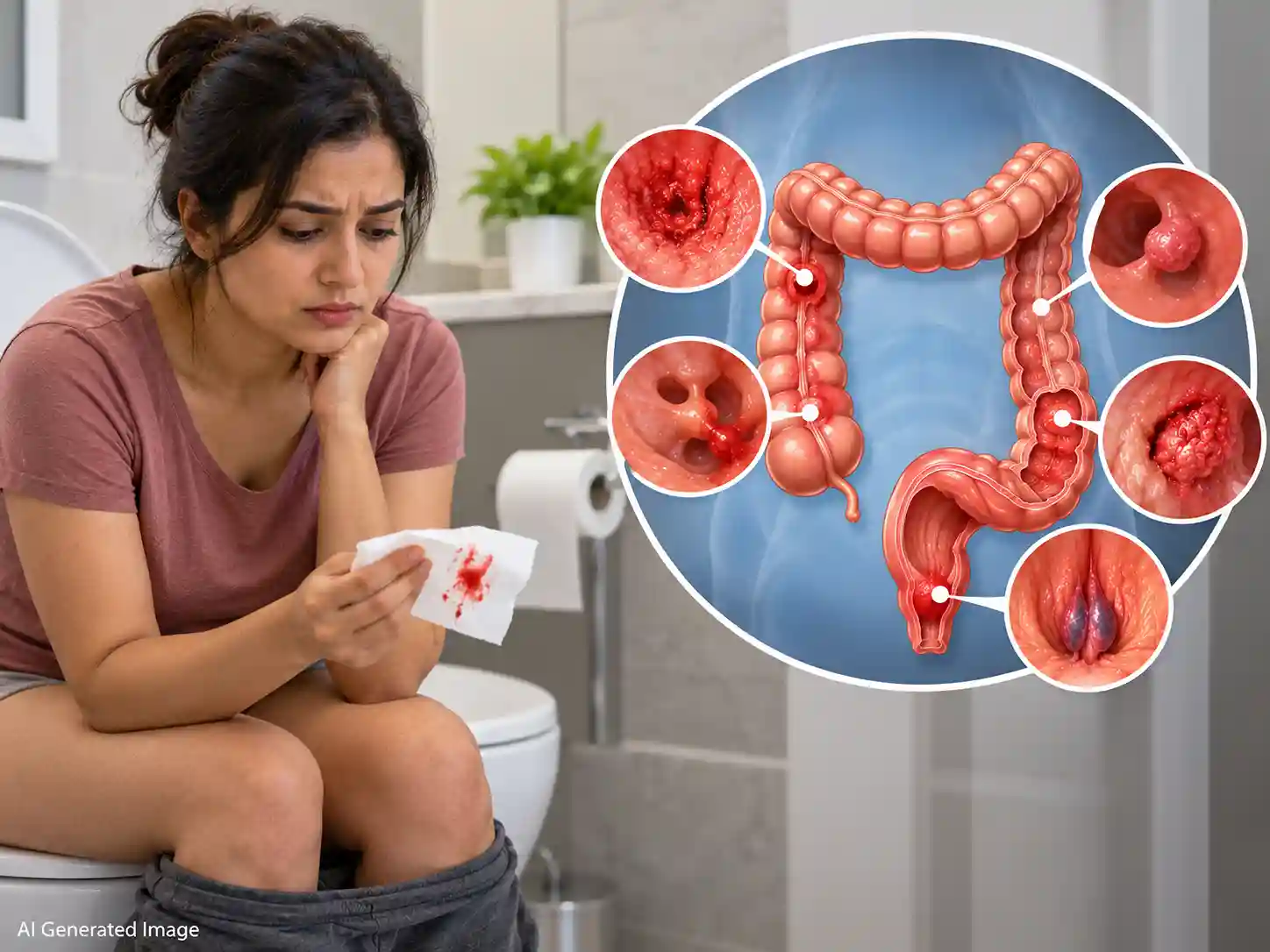
Blood in the stool is commonly caused by piles or anal fissures, but it can also indicate other bowel conditions, including colon or rectal cancer. Persistent or recurring bleeding needs medical assessment, particularly when accompanied by changes in bowel habits, unexplained weight loss or unusual tiredness.
Many people treat rectal bleeding with ointments without confirming its cause. An early assessment by a cancer doctor/surgeon can help identify the underlying condition and guide appropriate treatment.
Today’s blog will discuss the possible causes of blood in the stool, how piles differ from colon cancer, warning signs to watch for, diagnostic tests and available treatment options.
Is Blood in the Stool Always Piles?
No. But anal fissures, infections, bowel polyps and colorectal cancer can also cause blood in the stool. The appearance of the blood alone cannot reliably identify the cause.
Possible rectal bleeding causes include:
- Piles (Haemorrhoids): Swollen blood vessels around the anus or lower rectum.
- Anal fissures: Small tears in the lining of the anus.
- Infections: Certain intestinal infections can cause bloody diarrhoea.
- Bowel polyps: Growths inside the colon or rectum.
- Colorectal cancer: Malignancy developing in the colon or rectum.
Bleeding may be bright red, dark red or associated with black, tarry stools, depending partly on its source.
Do not assume bleeding is caused by piles, even if you have experienced them before. Always seek medical advice to establish the main cause of the condition.
How to Tell the Difference Between Piles and Colon Cancer

Both can be distinguished by their primary symptoms:
- Piles usually cause bright red blood in stool or after a bowel movement with no change in bowel habits.
- Colon cancer more often involves darker blood, persistent changes in bowel habits, unexplained weight loss, or extreme tiredness.
| Symptom | Piles (Haemorrhoids) | Colon Cancer |
| Blood Colour | Bright red | Dark red or maroon (sometimes invisible) |
| Pain | Common during bowel movements | Often painless early on; abdominal cramping later |
| Bowel Habit Change | Rare / Temporary | Persistent (diarrhoea or constipation lasting weeks) |
| Weight Loss | None | Unexplained and significant |
| Duration | Often intermittent (flares up and resolves) | Persistent and progressively worsens |
Note: As symptoms overlap significantly, only professional medical testing can accurately tell them apart.
Other Colon and Rectal Cancer Symptoms You Should Not Ignore
Besides blood in the stool, several other symptoms for both should not be ignored:
Warning signs include a lasting change in bowel habits, narrow stools, a feeling of incomplete emptying, abdominal pain, unexplained weight loss, and anaemia.
Colon Cancer Symptoms
- Bowel changes: Persistent diarrhoea or constipation.
- Stool shape: Narrow or pencil-thin stools.
- Abdominal distress: Continuous pain, cramping, or bloating.
- Systemic signs: Unexplained weight loss and fatigue caused by anaemia.
Rectal Cancer Symptoms
- Evacuation sensation: A frequent feeling of incomplete emptying (tenesmus).
- Urgency: A constant urge to have a bowel movement.
- Stool calibre: Noticeable changes in stool thickness.
- Localised pain: Pelvic or rectal pain.
Who Is at Higher Risk of Colorectal Cancer?
Family history, certain bowel conditions and lifestyle factors can influence an individual's risk.

Factors associated with increased risk include:
- Older age.
- A family history of colorectal cancer.
- Inherited conditions that increase cancer risk.
- Inflammatory bowel disease, including ulcerative colitis.
- A diet high in processed meat.
- High red meat consumption.
- Obesity and physical inactivity.
- Smoking and alcohol consumption.
Having one or more risk factors does not mean someone will develop cancer. People with a strong family history or inflammatory bowel disease may need earlier or more frequent assessment.
Although colorectal cancer risk increases with age, younger adults can also develop the disease.
Rates are rising by nearly 3% each year in adults under 50, and about 12% to 15% of all new cases now occur in younger individuals. [Sources (I & II)]
To learn how to reduce your risk of colon cancer, discuss preventive measures and appropriate screening options with a healthcare professional.
Which Tests Confirm the Cause of Blood in Stool?
A colonoscopy with biopsy is the main test. A doctor may add a CT or MRI to stage the cancer. Below is a beginner's guide to colon cancer screening.
- Colonoscopy: Examines the colon and rectum.
- Biopsy: Checks tissue for cancer cells.
- CT scan: Helps assess how far the cancer has spread.
- MRI scan: Provides detailed images of affected areas.
Colorectal cancer screening is intended to detect cancer or precancerous changes before symptoms develop. Screening recommendations vary by country, age and individual risk.
People experiencing bleeding or at average risk should begin regular colorectal cancer screening at age 45. (Source).
People with a family history or other risk factors may also need earlier assessment.
When Should You See a Cancer Surgeon?
Arrange a colon cancer assessment if you experience
- Repeated blood in the stool.
- Persistent changes in bowel habits.
- Unexplained weight loss or tiredness.
- Ongoing abdominal pain or discomfort.
- Anaemia or suspected iron deficiency.
How Is Colon and Rectal Cancer Treated?
Treatment depends on the cancer's location, TNM stage, tumour characteristics and the patient's overall health. Options may include surgery, chemotherapy and radiotherapy, used individually or in combination.
Here’s a breakdown
- Surgery: Removes the tumour and affected tissue.
- Keyhole or robotic surgery: Minimally invasive options for suitable patients.
- Chemotherapy: Uses medicines to destroy or control cancer cells.
- Radiotherapy: Uses radiation to treat cancer, particularly rectal cancer.
Some operations require a stoma, an opening in the abdomen through which waste passes into a bag. It may be temporary or permanent, depending on the operation and individual circumstances. Not every patient needs one.
Main Takeaway: Don’t Treat Bleeding Without a Diagnosis
Blood in the stool is not always caused by piles, but persistent or recurring bleeding needs medical assessment. Other warning signs include changes in bowel habits, unexplained weight loss, abdominal pain and unusual tiredness. A medical examination and appropriate tests can help identify the cause and guide treatment. Avoid self-diagnosis or prolonged self-treatment without confirming the reason for bleeding.
A cancer surgeon can help assess concerning symptoms and discuss the next steps.
Frequently Asked Questions
Is blood in stool always a sign of cancer?
No. Piles and anal fissures are common causes, but infections, polyps and other bowel conditions can also cause bleeding. Medical assessment is needed to identify the cause.
How do I know if rectal bleeding is piles or cancer?
Symptoms alone cannot reliably distinguish them. A clinician may recommend an examination, blood tests or colonoscopy based on bleeding patterns, associated symptoms, medical history and individual risk factors.
What is the first sign of colon cancer?
There is no single first sign. Some people develop blood in the stool, persistent bowel habit changes or abdominal discomfort, while others have no noticeable symptoms in early stages.
At what age should I get a colonoscopy?
Adults at average risk should begin colorectal cancer screening at age 45. Those with symptoms or increased risk may need assessment earlier.
Which doctor should I see for blood in stool?
Start with a qualified doctor, who may refer you to a gastroenterologist or colorectal surgeon. Persistent bleeding, concerning symptoms, or suspected cancer may require specialist assessment.
Medical Disclaimer
This content is for general educational purposes only and is not a substitute for professional medical advice, diagnosis or treatment.