
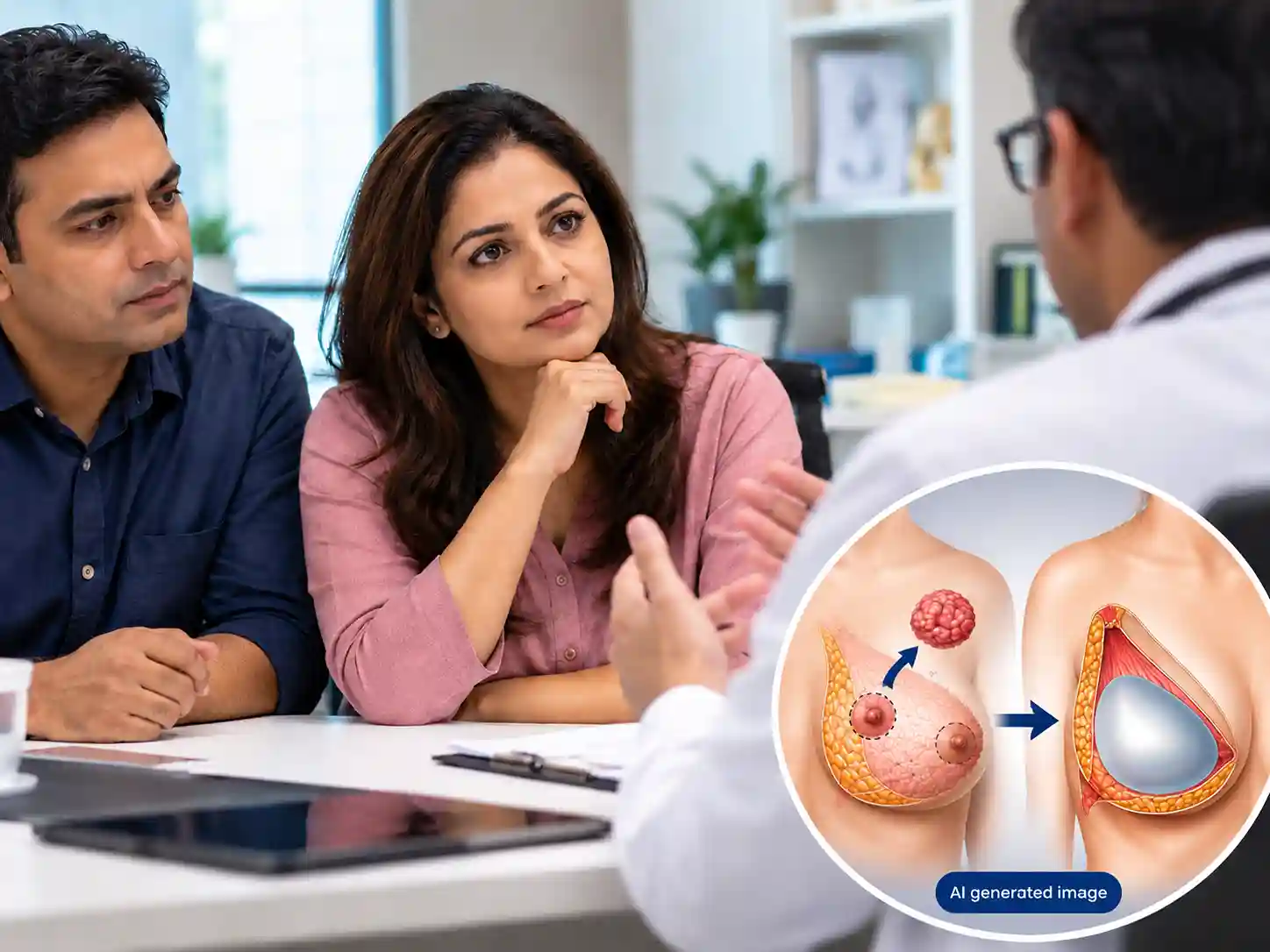
Yes, in many cases, breast cancer can be removed and the breast reshaped or reconstructed during the same operation. The appropriate approach depends on tumour size, cancer stage, breast anatomy and the overall treatment plan.
Oncoplastic surgery combines cancer removal with breast reshaping, while reconstruction can restore breast shape after mastectomy when suitable.
Many women may not realise that reconstruction is an option at the time of diagnosis. Discussing these approaches early with a breast cancer doctor helps them understand their options before surgery.
What Is Oncoplastic Surgery for Breast Cancer?
A procedure where the surgeon removes the lump and reshapes the remaining breast so it looks natural.
This advanced approach integrates plastic surgery techniques with conservative surgery, which typically involves removing the malignant mass along with some surrounding breast tissue.
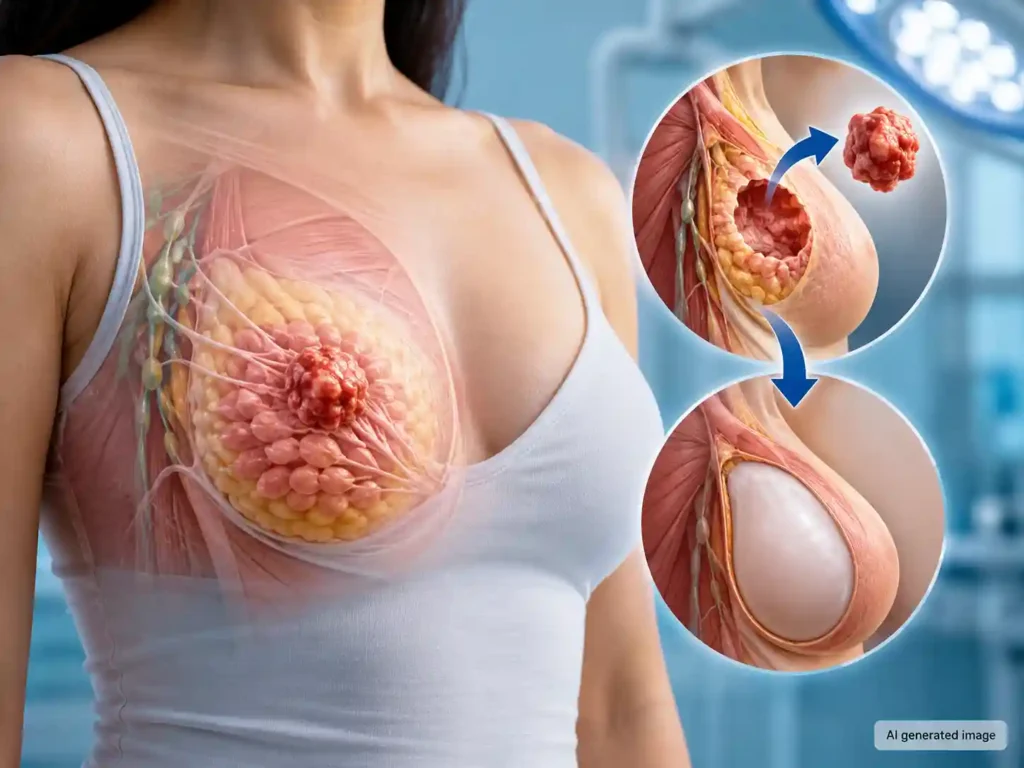
By reorganising the healthy tissue immediately after the tumour removal, this method allows larger or complex lumps to be safely excised while delivering a highly satisfactory cosmetic result.
It minimises structural defects and preserves symmetry, offering an excellent solution for patients seeking effective cancer clearance without sacrificing their natural shape.
Suitability depends on the tumour's size and location, breast size, cancer characteristics and the amount of tissue that needs removal.
Between 2012 and 2021, (source) demonstrates that patient awareness of oncoplastic breast reconstruction options more than doubled, increasing from 24% to approximately 51%.
Core Principles and Goals
| Core Principle | Description |
| Cancer Removal | Removes the tumour with a margin of surrounding healthy tissue. |
| Immediate Reshaping | Rearranges the remaining breast tissue to minimise dents and asymmetry. |
| Breast Conservation | May allow larger tumours to be removed while preserving the breast. |
| Improved Symmetry | May involve a breast lift or reduction to improve breast symmetry. |
How Does Immediate Breast Reconstruction After Mastectomy Work?
The procedure rebuilds the breast during the same operation as a mastectomy. Depending on the patient's needs, the surgeon may use an implant or tissue from another part of the body. The choice depends on cancer treatment plans, health, anatomy and personal preferences.
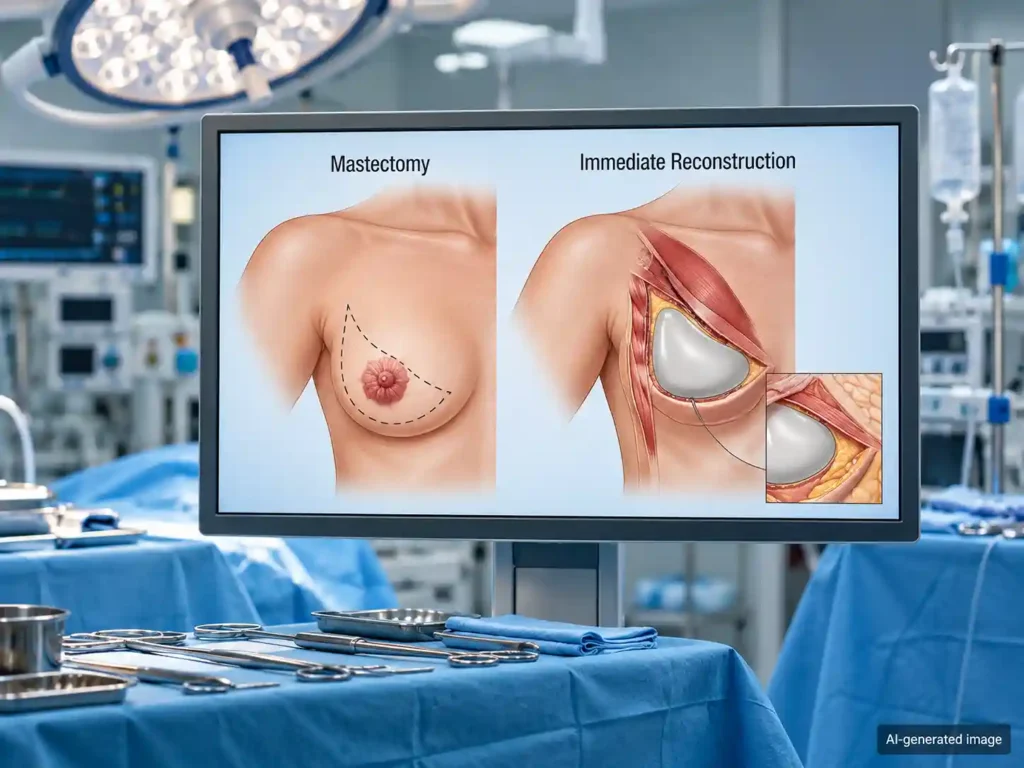
Reconstructive oncosurgery may involve placing an implant beneath the skin or chest muscle, sometimes after using a temporary tissue expander. Alternatively, the surgeon can transfer tissue from the back or abdomen to create the breast shape.
Implant vs Flap: Which Reconstruction Option Is Right?
Implant reconstruction uses a medical implant, while flap reconstruction uses the patient's own tissue. Each option has different benefits, limitations and recovery requirements.
| Feature | Implant reconstruction | Flap reconstruction |
| Material | Silicone or saline implant | Patient's own tissue |
| Common options | Direct implant or tissue expander | DIEP or latissimus dorsi flap |
| Donor site | No tissue donor site | Abdomen or back |
| Surgery | Usually less extensive | Usually more extensive |
| Recovery | Depends on the procedure | Often longer due to donor-site healing |
| Considerations | Implant-related complications may occur | Donor-site complications may occur |
The choice depends on anatomy, medical fitness, cancer treatment, personal preferences and potential complications. The surgeon should explain expected outcomes and whether additional procedures may be needed.
Immediate vs Delayed Breast Reconstruction: Which Is Better?
Neither approach is universally better.
The right choice depends on the stage, the treatment plan and personal priorities, including the possibility of combining surgery with chemotherapy and radiation.
Immediate reconstruction happens during the mastectomy, preserving the natural skin envelope and avoiding the emotional impact of living without a breast mound. It requires fewer overall surgeries but extends initial operative time.
Delayed reconstruction occurs months or years later, after completing primary cancer treatments. This approach is safer for patients with advanced cancers or significant health risks, as it eliminates the threat of surgical complications delaying lifesaving therapies. Neither timing affects cancer recurrence rates or interferes with disease detection.
How Do Radiation and Chemotherapy Affect Reconstruction Timing?
- Radiation Therapy
Radiation damages tissue elasticity, impairs healing, and significantly increases the risk of implant failure or capsular contracture. If post-mastectomy radiation is required, surgeons generally recommend delayed reconstruction or a temporary tissue expander until therapy concludes.
- Chemotherapy
Chemotherapy suppresses bone marrow function and lowers immune response, which spikes infection risks and delays surgical wound healing. Reconstructive surgeries must be carefully scheduled around cycles, typically requiring a four-to-six-week buffer zone before or after chemotherapy administration.
- Tissue Expanders
If treatment plans are uncertain, a temporary expander can be placed immediately to preserve skin space. This serves as a placeholder during active chemotherapy or radiation, keeping options open for a final implant or flap surgery later.
Is Breast Reconstruction Safe After Cancer? (Image 3)
Yes. It is generally considered safe for appropriately selected patients and does not inherently increase the risk of breast cancer recurrence. [Source].
Plan it alongside cancer treatment to avoid unnecessary delays.
Safety and Recurrence
- Cancer Detection: Reconstructed breasts (using implants or your own tissue) rarely hide a cancer recurrence, and they do not make it harder to detect or treat if it does return.
- Timing Options: Reconstruction can be done immediately (at the same time as a mastectomy) or delayed (months or years later after other treatments like radiation or chemotherapy are finished).[Source].
A breast cancer surgeon can discuss suitable reconstruction options in coordination with the oncology team.
H2: Questions to Ask Your Breast Cancer Doctor Before Surgery
Discuss these points with your doctor before deciding on reconstruction:
- Am I a candidate for a lumpectomy (breast-conserving surgery), or do my tumour size and stage necessitate a full mastectomy?
- Which surgical technique do you recommend for my specific case, and will you need to perform a sentinel lymph node biopsy?
- What about radiation therapy after surgery—will I need it, and how will it impact my timing for breast reconstruction?
- What does the recovery process look like, including hospital stay duration and managing surgical drains at home?
What is The Typical Recovery Timeline?
Recovery varies by procedure, overall health and additional cancer treatments.
According to the [Source], typical recovery involves a 2- to 4-week period, though returning to full, strenuous physical activity or a normal routine can take 3 to 6 weeks, depending on the extent of the surgery.
A conservation surgeon can explain the expected recovery timeline and follow-up requirements.
Final Takeaway: One Operation Can Do Both
Modern advancements allow you to undergo tumour removal and breast reconstruction simultaneously during a single procedure.
If you are in Kolkata or nearby, discuss the available options, risks and timing with a breast cancer doctor before making a decision.
Take the next step in your healing journey—schedule a consultation today to discuss your surgical options.
Frequently Asked Questions
Can breast reconstruction be done at the same time as a mastectomy?
Yes. Reconstruction can often begin during mastectomy, using an implant or the patient's own tissue. Suitability depends on cancer treatment plans, medical fitness and surgical considerations.
What is oncoplastic breast surgery, and who is a candidate?
It combines tumour removal with reshaping the remaining breast. Eligibility depends on tumour size and location, breast anatomy, cancer characteristics and whether adequate cancer removal is possible.
Is breast reconstruction safe after breast cancer?
Yes, it is generally safe for appropriately selected patients. However, complications can occur, and reconstruction must be coordinated with cancer treatment, follow-up and individual medical needs.
Should I choose implant or flap reconstruction?
Implants use artificial devices, while flap procedures use tissue from another body area. The choice depends on anatomy, treatment plans, medical fitness, preferences and potential complications. Neither option is universally better, as each involves a different balance of surgery time, recovery, and long-term maintenance
How long does recovery take after breast reconstruction?
Recovery after breast reconstruction typically takes 2–3 weeks for light activities, 6–8 weeks for routine activities and moderate exercise, and 3 months to a year for full healing and scar maturation. The exact timeline depends on the reconstruction technique and individual recovery.
Medical Disclaimer:
This content is for educational purposes only and does not replace professional medical advice, diagnosis, or treatment.