
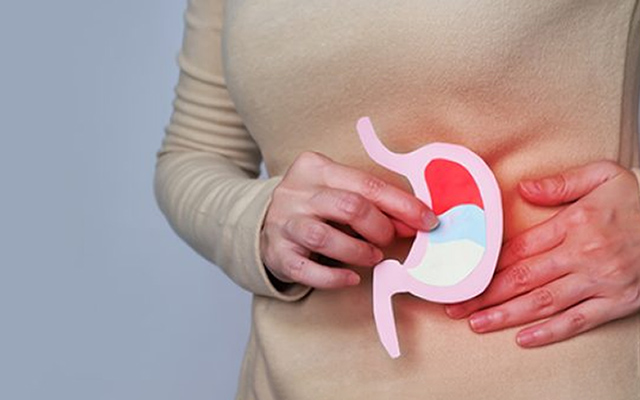
Stomach cancer, also known as gastric cancer, develops when malignant cells form within the inner mucosal lining of the stomach. As early-stage gastric malignancies frequently present with mild, non-specific gastrointestinal distress, the disease is regularly misdiagnosed as routine acid peptic disease or gastritis.
Understanding the critical thresholds for clinical investigation is vital to identifying the disease before it progresses.
For individuals seeking specialised evaluation, consulting Dr Suvadip Chakrabarti, a dedicated cancer specialist in Kolkata, ensures access to advanced diagnostics and modern therapeutic interventions.
Quick View: Gastric Cancer Indicators
- Early stomach cancer mimics standard acid reflux, indigestion, and bloating, frequently delaying critical diagnoses.
- Unexplained weight loss, persistent vomiting, iron-deficiency anaemia, and difficulty swallowing (dysphagia) require immediate medical review.
Early vs. Advanced Symptoms of Stomach Cancer: When to Worry
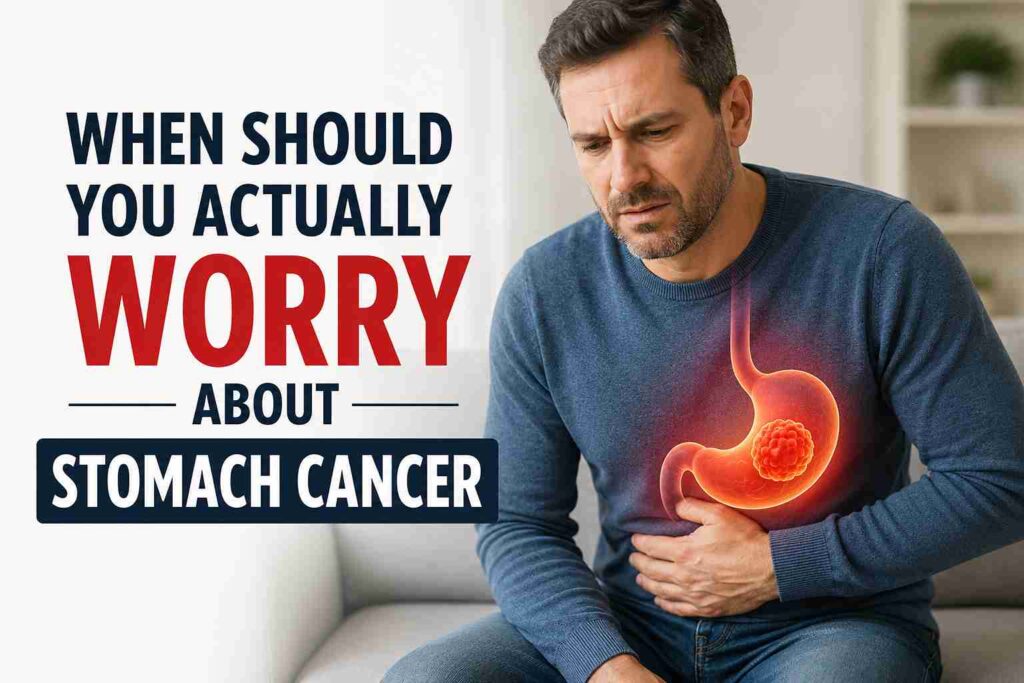
Distinguishing between everyday digestive issues and malignant pathologies requires a clear understanding of symptom persistence, severity, and clustering. Symptoms should be tracked across two distinct clinical phases.
Early-Stage Gastric Symptoms
During the initial phases of mucosal cell mutation, symptoms are localised and often mimic standard dyspepsia:
- Persistent Indigestion: Chronic burning sensations or reflux in the upper abdomen that fails to resolve with standard over-the-counter antacids.
- Early Satiety: A distinct feeling of fullness or bloating immediately after consuming remarkably small amounts of food.
- Mild Nausea: Intermittent, unexplained bouts of nausea that are unrelated to specific dietary changes or viral illnesses.
Advanced-Stage Gastric Symptoms
As the tumour grows and invades deeper muscular layers of the stomach wall or compromises the gastric outlet, explicit physiological changes surface:
- Unexplained Weight Loss: A rapid, involuntary drop in body mass exceeding 5% of total body weight within a single month without active dieting.
- Melena and Hematemesis: The appearance of dark, tarry, foul-smelling stools or vomiting blood, indicating active bleeding from the tumour site.
- Progressive Dysphagia: Increasing difficulty swallowing food or a persistent sensation that food is lodged in the lower oesophagus or upper stomach.
- Severe Epigastric Pain: Continuous, deep, aching pain located in the upper central abdomen that worsens after eating.
- Unexplained Iron-Deficiency Anaemia: Chronic fatigue, pale skin, and shortness of breath caused by microscopic, long-term blood loss from the gastric lining.
Primary Risk Factors for Stomach Cancer
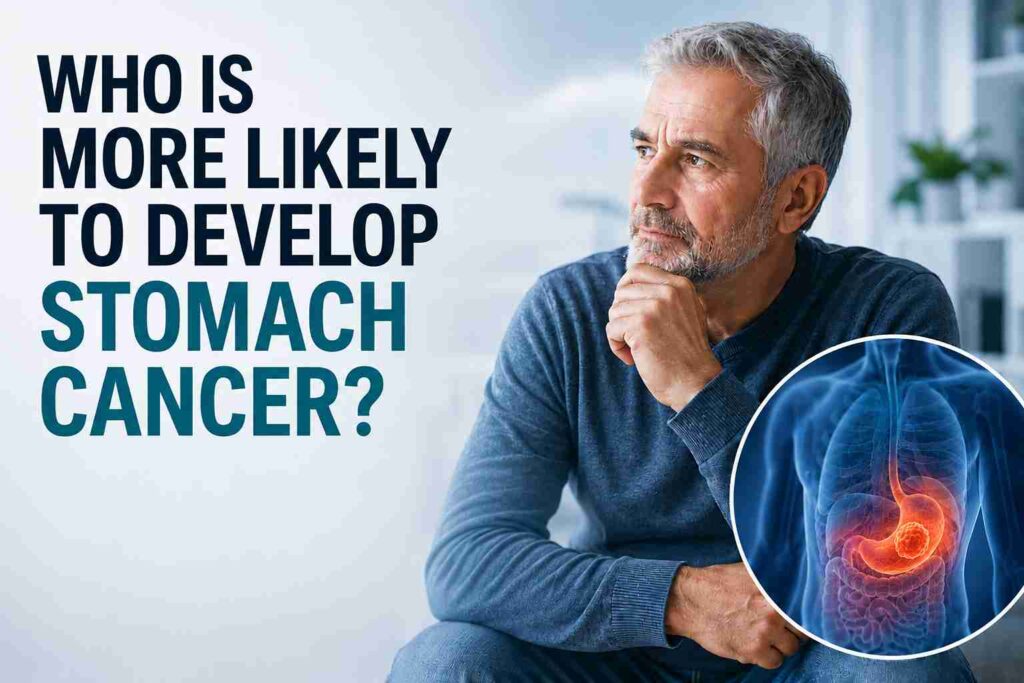
Stomach cancer is a multifactorial disease driven by chronic environmental irritation, genetic predispositions, and cellular mutations.
Key risk factors include:
1. Chronic Helicobacter pylori Infection
- The Mechanism: H. pylori is a widespread bacterial pathogen that colonises the gastric mucosa, causing chronic, long-term inflammation.
- The Impact: Untreated, long-term H. pylori infections can induce chronic atrophic gastritis, which can progress to intestinal metaplasia and gastric adenocarcinoma.
2. Dietary Habits and Lifestyle Factors
- Nitrosamine Exposure: High consumption of smoked, salt-preserved, pickled, and chemically cured foods introduces carcinogens that damage the stomach lining.
- Tobacco Consumption: Smoking greatly increases the risk of proximal stomach cancers near the gastroesophageal junction.
- Alcohol Abuse: Chronic alcohol intake acts as a mucosal irritant, leaving the gastric lining highly vulnerable to cellular mutations.
3. Demographic and Familial Risk Variables
- Age and Gender Profiles: Gastric malignancies occur most frequently in individuals over the age of 50 and show a higher incidence rate in males.
- Genetic Predispositions: A verified family history of gastric cancer or inherited genetic mutations—such as CDH1 gene alterations or Lynch syndrome—exponentially increases lifetime risk.
The Diagnostic Pathway for Stomach Cancer
If an individual displays persistent symptoms or possesses multiple high-risk factors, a systematic diagnostic pathway must be initiated by a cancer specialist to achieve an accurate, verified diagnosis.
| Diagnostic Tool | Primary Objective | Clinical Outcome |
| Upper GI Endoscopy | Visual inspection of the mucosal lining via a high-definition camera. | Direct visualisation of ulcerations and tissue extraction (biopsy). |
| Contrast-Enhanced CT (CECT) | Cross-sectional imaging of the chest, abdomen, and pelvis. | Maps local tumour invasion and detects major distant metastases. |
| PET-CT Scan | Whole-body metabolic activity evaluation. | Pinpoints hidden, high-metabolism metastatic deposits in distant organs. |
Upper Gastrointestinal Endoscopy (Esophagogastroduodenoscopy)
- Visual Inspection: This is the gold standard diagnostic tool for identifying gastric cancer. A specialist inserts a thin, flexible tube equipped with a high-definition camera through the mouth into the stomach.
- Biopsy Extraction: This allows the oncologist to visually inspect the mucosal lining, identify suspicious ulcerations or masses, and extract small tissue samples for precise histopathological analysis.
Advanced Radiography and Staging Scans
- Contrast-Enhanced CT (CECT): Detailed computed tomography scans of the chest, abdomen, and pelvis are utilized to check for local tumor invasion and distant metastases.
- Positron Emission Tomography (PET-CT): Evaluates metabolic activity across the body to detect hidden metastatic deposits in distant organs or lymph nodes.
Determining Patient Eligibility For Robotic Cancer Surgery
Robotic surgery is a powerful tool, but it is not suitable for every individual. A patient's customised treatment plan depends entirely on their unique medical situation.
Critical Evaluation Factors
- Cancer Staging: The size, depth, and spread of the tumour dictate whether surgery should happen first or follow systemic therapy.
- Overall Health: The patient's heart, lung, and nutritional status must be strong enough to undergo anesthesia and healing.
- Prior Abdominal Surgeries: Existing scar tissue from past operations can sometimes impact the feasibility of a robotic approach.
Robotic Surgery and Advanced Stomach Cancer Treatments
Key Surgical Procedures
- Partial or Subtotal Gastrectomy: Surgeons remove only the cancerous portion of the stomach, preserving as much healthy tissue as possible.
- Total Gastrectomy: The entire stomach is removed. The surgeon then performs reconstructive surgery, often creating a J-pouch to connect the esophagus directly to the small intestine.
- Extended Lymphadenectomy: Highly precise dissection and removal of the lymph nodes surrounding critical blood vessels to ensure complete cancer clearance.
Multimodal Treatment for Advanced Stages
While robotic surgery is highly effective for localised tumours, advanced stomach cancer usually requires a comprehensive, combination treatment strategy.
- Neoadjuvant Therapy: Chemotherapy or radiation therapy given before surgery to shrink the tumour and make it easier to remove cleanly.
- Adjuvant Therapy: Follow-up treatments are administered after surgery to target any remaining microscopic cancer cells and prevent recurrence.
- Targeted & Immunotherapy: Advanced medications designed to attack specific proteins on cancer cells or train the patient's immune system to destroy gastric tumours.
When Should You Consult a Cancer Specialist for Stomach Symptoms?
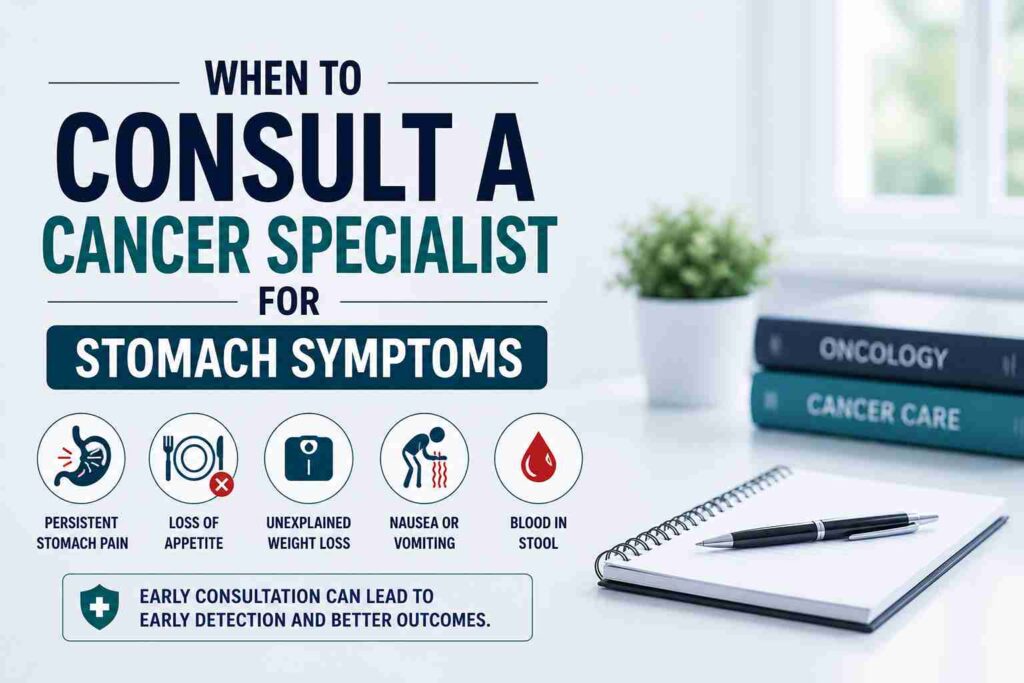
You should consider consulting a specialist if:
- Symptoms persist for more than two weeks
- Digestive symptoms repeatedly return
- Symptoms worsen despite treatment
- You experience weight loss, bleeding, or swallowing difficulties
- You have a strong family history of stomach cancer
- Multiple risk factors are present
A Final Takeaway
- Stomach cancer often begins with symptoms that resemble common acidity or indigestion, making early diagnosis difficult.
- Persistent indigestion, early fullness, unexplained weight loss, vomiting blood, black stools, anaemia, or difficulty swallowing should never be ignored.
- Risk increases with H. pylori infection, smoking, alcohol use, unhealthy dietary habits, age above 50, and family history.
- Upper GI endoscopy with biopsy remains the gold standard for diagnosis, while CT and PET-CT scans help determine cancer stage.
- Early consultation with a cancer specialist enables timely diagnosis and access to advanced treatment options, improving outcomes.
Book your consultation with Dr Suvadip Chakrabarti Today.
Call 093301 79441 and take the first step toward an accurate diagnosis and advanced, personalised treatment.
People Also Ask
How can you tell the difference between gas pain and stomach cancer?
Gas pain is sharp, shifts locations, and resolves quickly. Stomach cancer causes a persistent, deep ache above the navel that progressively worsens over weeks and intensifies after eating.
Can a regular stomach ulcer turn into gastric cancer?
Benign stomach ulcers never transform into cancer. However, malignant gastric tumors often ulcerate and bleed, completely mimicking common ulcer symptoms during the early stages of the disease.
Why does stomach cancer make you feel full so quickly?
As a gastric tumor grows, it stiffens the muscular stomach wall and reduces its physical volume. This structural restriction physically prevents the stomach from expanding normally during meals.
Is there a non-invasive screening test for stomach cancer?
No. While advanced blood tests can track circulating tumor DNA, a high-definition upper gastrointestinal endoscopy with a tissue biopsy remains the only definitive method to diagnose stomach cancer.
Does having acid reflux mean you are at risk for stomach cancer?
Routine acid reflux does not cause stomach cancer. However, chronic, untreated severe GERD elevates your risk for malignancies located specifically at the junction where the oesophagus meets the stomach.
What colour is stool when you have stomach cancer?
The stool appears dark, black, tarry, and foul-smelling. This distinct discolouration occurs because your stomach acid digests the blood coming from the bleeding tumour site before it passes.
At what age should you start worrying about stomach cancer?
The risk increases sharply after age 50, with most cases diagnosed around age 65. However, individuals with a verified family history of gastric malignancies require much earlier screenings.