

An “inoperable” cancer diagnosis is not always permanent. In some patients, treatment response, reassessment, or improved overall condition can change whether surgery becomes possible later.
Modern cancer care now focuses not only on removing tumours, but also on identifying when previously difficult cancers may become operable after expert evaluation.
In today’s blog, Dr Suvadip Chakrabarti, a cancer specialist in Kolkata, explains whether an operable cancer becomes operable.
What Does Inoperable Cancer Actually Mean?
“Inoperable” usually means the cancer cannot be safely removed at that point in time. It does not automatically mean treatment has failed or that no options remain.
Why Doctors May Avoid Surgery Initially
Cancer surgery may not be recommended when:
- The tumour is attached to major blood vessels or vital organs.
- Complete removal is not technically possible.
- Cancer has spread beyond safe surgical boundaries.
- Surgery risks outweigh expected benefits.
- The patient may not be able to safely tolerate a major operation.
In many complex cases, doctors reassess operability again after treatment.
Does Inoperable Mean Untreatable?
No. Many patients still receive:
- Chemotherapy
- Targeted therapy
- Immunotherapy
- Radiation therapy
- Symptom-focused supportive care
In some cancers, these treatments may later improve surgical possibilities.
Can Inoperable Cancer Become Operable Later?
Yes. Some cancers initially considered inoperable may become operable after treatment and reassessment.
This process is often called:
- Downstaging
- Conversion therapy
- Treatment-first approach
Modern oncology increasingly focuses on identifying patients who may benefit from delayed surgery after treatment response.
What Changes Can Make Surgery Possible Later?
| Factor | How it may help |
| Tumour shrinkage | Makes surgical removal easier |
| Reduced vessel involvement | Improves surgical safety |
| Limited cancer spread | Expands treatment options |
| Better patient fitness | Lowers surgical risk |
| Strong treatment response | Changes in surgical planning |
Why Reassessment Matters After Treatment
Operability can change over time.
Some tumours respond unexpectedly well to treatment. Others may pull away from nearby blood vessels or reduce enough in size for surgeons to consider removal later.
This is why reassessment by an experienced cancer specialist remains important throughout treatment.
Dr Suvadip Chakrabarti, a cancer specialist in Kolkata, evaluates whether changing tumour behaviour or treatment response may create new surgical possibilities in selected patients.
Does Cancer Stage Decide Whether Surgery Is Possible?
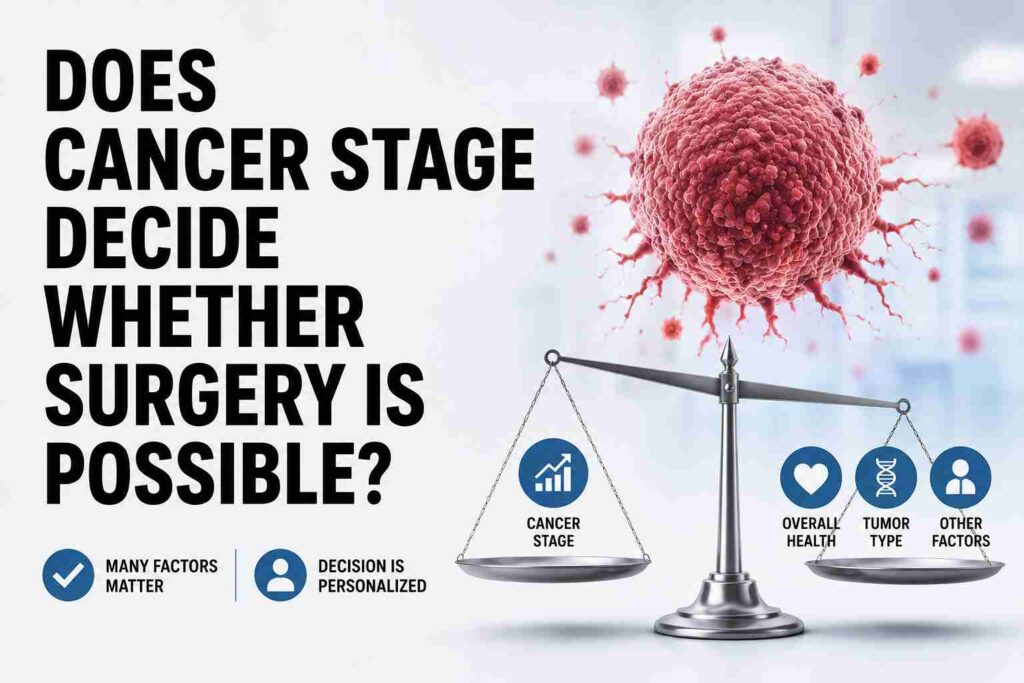
No. Cancer stage alone does not decide operability.
Two patients with the same cancer stage may have very different surgical options depending on:
- Exact tumour location
- Blood vessel involvement
- Organ invasion
- Biological aggressiveness
- Response to treatment
- Overall patient health
Why Some Stage 4 Cancers May Still Be Evaluated For Surgery
In selected situations, surgery may still be considered if:
- Cancer spread is limited
- The primary tumour remains removable
- Other disease sites can be controlled separately
- Treatment response is favourable
This is more likely in carefully selected borderline or oligometastatic cancers.
Why Do Doctors Sometimes Refuse Cancer Surgery?
Doctors avoid surgery when it is unlikely to improve survival, safety, or quality of life.
Tumours Involving Major Blood Vessels
Tumours near major arteries or veins can make surgery extremely complex, as these vessels are critical for organ function and survival.
In such cases:
- Surgery may carry a high bleeding risk.
- Complete tumour removal may not be achievable.
- Reconstruction may become unsafe.
If treatment later shrinks the tumour away from these structures, surgery may become possible.
Extensive Cancer Spread
Surgery is usually avoided when cancer has spread widely across multiple organs because removing one tumour may not improve overall outcomes.
However, limited spread does not necessarily rule out surgery.
Poor Surgical Fitness
Some patients may not initially tolerate major surgery due to:
- Severe weakness
- Malnutrition
- Poor organ function
- Other medical illnesses
Improving overall health sometimes changes surgical eligibility later.
Can Chemotherapy Shrink Cancer Enough For Surgery?
Yes. One major goal of modern cancer treatment is to convert difficult cancers into operable ones whenever possible.
How Chemotherapy May Improve Operability
Chemotherapy may:
- Shrink tumour size
- Reduce local spread
- Improve surgical access
- Lower tumour pressure on nearby structures
Can Targeted Therapy Help Before Surgery?
In selected cancers, targeted therapy may:
- Slow tumour growth
- Reduce cancer activity
- Improve treatment response rates
This may help surgeons reconsider operability later.
Can Immunotherapy Make Surgery Possible?
Some cancers respond dramatically to immunotherapy.
In selected patients, this may:
- Reduce tumour burden
- Improve control of the spread
- Change surgical planning after reassessment
Not every cancer responds similarly, which is why specialist evaluation remains important.
What Scans And Tests Decide Whether Cancer Is Operable?
Doctors rely heavily on imaging and clinical evaluation before recommending surgery.
Common Tests Used Before Cancer Surgery
| Scan/Test | What doctors evaluate |
| CT scan | Tumour size and spread |
| MRI | Soft tissue and organ involvement |
| PET scan | Hidden or distant disease |
| Blood tests | Overall health and organ function |
What Doctors Look For On Imaging
Doctors assess:
- Tumour location
- Blood vessel involvement
- Nearby organ invasion
- Distant spread
- Treatment response over time
Scans guide decisions, but they are always combined with clinical judgment.
When Should Patients Seek A Second Opinion For Inoperable Cancer?

A second opinion can sometimes change treatment direction, especially in complex or borderline cases.
Situations Where Reassessment May Help
| Situation | Why expert review matters |
| Borderline operable cancer | Surgery may become possible later |
| Complex scan findings | Imaging interpretation may vary |
| Good treatment response | Operability may improve |
| Advanced but localised cancer | Additional treatment strategies may exist |
Why Specialist Review Matters In Complex Cancers
Cancer surgery decisions are rarely simple.
Multidisciplinary evaluation may involve:
- Surgical oncologists
- Medical oncologists
- Radiation oncologists
- Radiologists
- Pathologists
Together, they assess:
- Whether surgery is technically possible
- Whether treatment should come first
- Whether surgery may improve survival or quality of life
Dr Suvadip Chakrabarti works closely with multidisciplinary cancer teams to help patients understand whether reassessment or treatment response may change available options.
What Happens If Cancer Still Cannot Be Removed?
Even when surgery is not possible, treatment may still help:
- Slow cancer growth
- Reduce symptoms
- Improve quality of life
- Extend survival in selected cases
Importantly, cancer status may continue to change during treatment, which is why periodic reassessment remains important.
Final Takeaway: Can Inoperable Cancer Become Operable?
Yes, in selected cases.
“Inoperable” often reflects the current situation rather than a permanent conclusion. Advances in chemotherapy, targeted therapy, imaging, and multidisciplinary cancer care have improved the ability to reassess cancers over time.
Early evaluation by Dr Suvadip Chakrabarti, a cancer specialist in Kolkata, may help determine whether treatment response, reassessment, or specialised surgical planning could expand available treatment options for complex cancers.
People Also Ask About Inoperable Cancer And Surgery
What does borderline operable cancer mean?
Borderline operable cancer means the tumour is difficult to remove safely due to nearby blood vessels or organ involvement. After treatment, reassessment by Dr Suvadip Chakrabarti may help determine whether surgery has become technically feasible.
How do doctors decide if cancer surgery is too risky?
Doctors assess:
- Blood vessel involvement
- Organ invasion
- Cancer spread
- Overall patient fitness
Can delaying cancer surgery affect treatment options later?
Sometimes. In certain cancers, prolonged delays may affect tumour progression or future treatment planning. Early specialist evaluation helps determine the safest timing for treatment and surgery.
Can improving overall health make cancer surgery safer later?
Yes. Better nutrition, physical strength, and recovery capacity may improve surgical fitness in selected patients before major cancer surgery.
Who decides whether cancer surgery is possible?
Cancer surgery decisions usually involve multidisciplinary review by surgical oncologists, medical oncologists, radiologists, and other cancer specialists, who assess scans, tumour behaviour, and surgical safety.
When should families seek a second opinion for inoperable cancer?
When:
- Surgery was initially declined
- Scan findings appear complex
- Treatment response changes
- Cancer remains localised
Can surgery still help if cancer has spread to only one area?
Sometimes. Certain patients with limited or localised cancer spread may still be evaluated for surgery if disease control remains favourable after specialist review.
What should patients prepare before meeting a cancer specialist in Kolkata?
- Biopsy reports
- CT, MRI, or PET scan reports
- Previous treatment records
- Blood test results
- Current medication details