

Triple-negative breast cancer (TNBC) is an aggressive subtype that lacks common hormone and HER2 targets, making treatment more complex.
It grows faster, has a higher recurrence risk, and requires carefully planned therapies. Advances in treatment are improving outcomes through precision and innovation. Choosing the right breast cancer doctor is critical for timely and effective care.
Today’s blog will cover the nature of triple-negative breast cancer, its challenges, and evolving treatment strategies.
Understanding Triple-Negative Breast Cancer
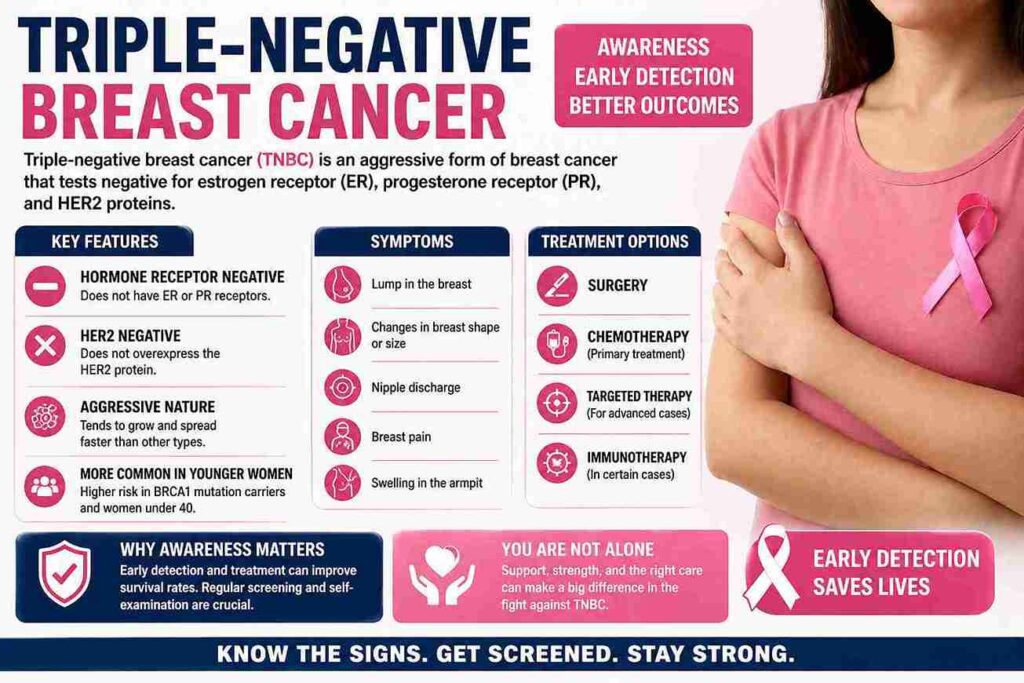
Triple-negative breast cancer is a subtype that does not express estrogen, progesterone, or HER2 receptors, limiting targeted treatment options. Understanding what is triple-negative breast cancer helps patients grasp why it behaves differently and requires specialised care.
Why is it called “triple-negative”
It is termed “triple-negative” because the cancer cells lack three key receptors:
- Estrogen
- Progesterone
- HER2 proteins
These receptors are common treatment targets, and their absence means fewer standard targeted therapies are effective.
How TNBC differs from other types of breast cancer
Unlike other breast cancers, TNBC does not respond to hormone therapy or HER2-targeted drugs. It relies more on chemotherapy and emerging treatments, making management more complex and dependent on tumour biology.
Gain more insights from the video about
Breast Cancer Symptoms। স্তনে ১০টার মধ্যে ৯টা টিউমারই ক্যানসার নয়, তবে বাকি ১টি যেন সময়ে ধরা পড়ে
Why TNBC is considered more aggressive
TNBC tends to grow faster, spread earlier, and has a higher chance of recurrence compared to other types. This aggressive nature makes early diagnosis and prompt treatment essential.
Why Triple-Negative Breast Cancer Is Challenging to Treat
Triple-negative breast cancer presents unique challenges due to its biology and lack of targeted receptors. This impacts treatment choices and outcomes, making triple-negative breast cancer treatment more complex than other subtypes.
Lack of hormone receptors and HER2 targets
Without hormone receptors or HER2, common targeted therapies cannot be used. This limits treatment options primarily to chemotherapy and newer targeted strategies.
Faster growth and higher recurrence risk
TNBC grows rapidly and is more likely to recur after treatment. This increases the importance of aggressive initial management and close follow-up.
Why treatment decisions are often more complex
Treatment planning must consider tumour biology, stage, and patient factors. The absence of standard targets means decisions rely heavily on clinical judgment and evolving therapies.
Symptoms and Early Warning Signs of Triple-Negative Breast Cancer
Recognising triple-negative breast cancer symptoms early can significantly improve outcomes. TNBC may present similarly to other breast cancers, but often progresses faster.
Common breast changes to watch for
- Lump in the breast or underarm
- Changes in breast shape or size
- Skin dimpling or redness
When to see a breast specialist
Any new lump, persistent pain, or visible change should be evaluated promptly by a specialist to avoid delays in diagnosis.
Can TNBC look different from other breast cancers?
TNBC may appear to grow more rapidly and can sometimes present as a larger mass at diagnosis compared to other types.
Causes and Risk Factors for Triple-Negative Breast Cancer
Understanding triple-negative breast cancer causes and risk factors helps identify individuals at higher risk and supports early detection strategies.
Age, family history, and inherited mutations
Younger women and those with a family history of breast cancer are at higher risk. Genetic predisposition plays a key role.
BRCA1 and genetic risk
BRCA1 mutations are strongly associated with TNBC, increasing both risk and influencing treatment decisions.
Lifestyle and reproductive factors
Factors such as obesity, lack of breastfeeding, and reproductive history may contribute to risk.
How Triple-Negative Breast Cancer Is Diagnosed
Accurate triple-negative breast cancer diagnosis include -
- Clinical breast exam and imaging
- Biopsy and receptor testing
- Genetic testing and biomarker evaluation
They are essential for selecting the right treatment strategy and improving outcomes.
Clinical breast exam and imaging
Doctors use physical examination along with mammography, ultrasound, or MRI to detect abnormalities and assess tumour size.
Biopsy and receptor testing
A biopsy confirms cancer and determines receptor status, identifying TNBC by the absence of ER, PR, and HER2.
Genetic testing and biomarker evaluation
Genetic testing helps identify BRCA mutations and guides targeted treatment approaches.
Stages of Triple-Negative Breast Cancer
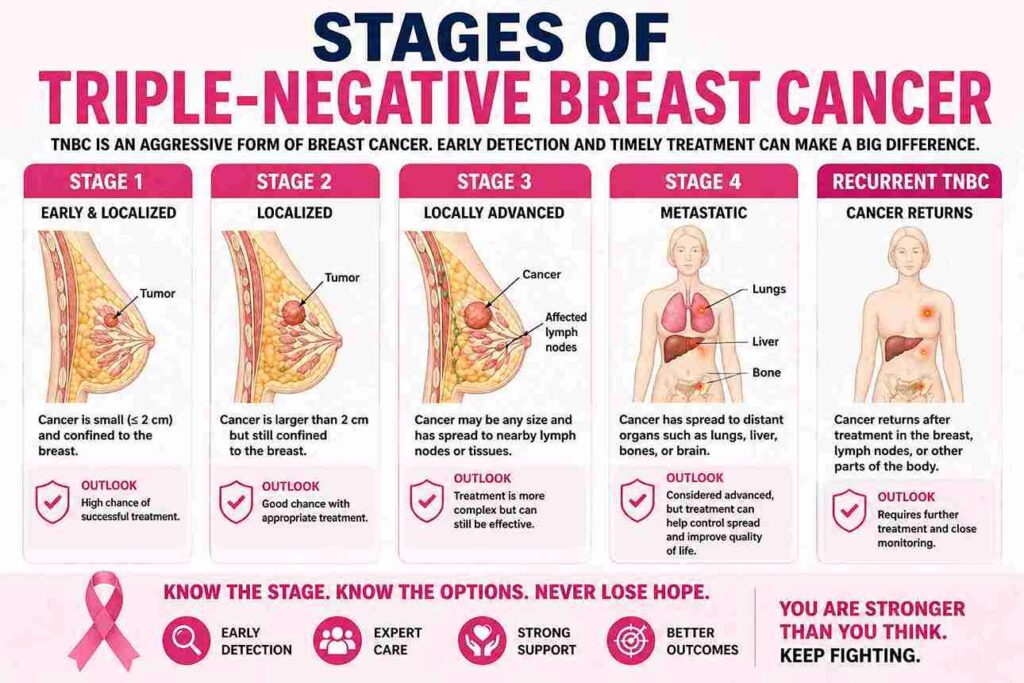
The stages of triple-negative breast cancer determine how far the disease has spread and guide treatment planning.
Early-stage TNBC
Cancer is limited to the breast or nearby lymph nodes, with a strong chance of successful treatment. Early intervention significantly improves outcomes and survival.
Locally advanced TNBC
Cancer has spread to surrounding tissues or multiple lymph nodes, making treatment more complex. It typically requires a combination of therapies for effective control.
Metastatic TNBC
Cancer has spread to distant organs, requiring systemic treatment approaches. The focus is on controlling disease, prolonging survival, and maintaining quality of life.
Recurrent TNBC
Cancer recurs after initial treatment, either locally or at distant sites. Management involves reassessing treatment options based on prior therapy and current disease status.
Standard Treatment Options for Triple-Negative Breast Cancer
Standard TNBC treatment options focus on controlling disease and improving survival, often using a combination of therapies.
- Surgery: Removes the tumour and affected tissue, often used in early stages with curative intent.
- Chemotherapy: The backbone of TNBC treatment targets rapidly dividing cancer cells throughout the body.
- Radiation therapy: Used to destroy remaining cancer cells and reduce recurrence risk after surgery.
Neoadjuvant vs adjuvant treatment
| Type | Purpose |
| Neoadjuvant | Given before surgery to shrink tumours |
| Adjuvant | Given after surgery to eliminate residual disease |
New Treatment Approaches for Triple-Negative Breast Cancer
Advances in new treatment approaches for triple-negative breast cancer are improving outcomes through targeted and immune-based therapies.
Immunotherapy for eligible TNBC patients
Immunotherapy for triple-negative breast cancer helps the immune system recognise and attack cancer cells, especially in advanced cases.
PARP inhibitors for BRCA-mutated TNBC
PARP inhibitors for triple-negative breast cancer target DNA repair pathways in BRCA-mutated cancers, improving treatment response.
Antibody-drug conjugates in advanced disease
Antibody-drug conjugates are advanced therapies that link targeted antibodies with potent chemotherapy to deliver drugs directly to cancer cells.
Clinical trials and emerging targeted strategies
Ongoing research continues to expand targeted therapy for triple-negative breast cancer options.
How Treatment Changes by Stage and Tumour Biology
Treatment decisions vary based on stage and tumour characteristics, requiring expert evaluation. Dr Suvadip Chakrabarti, a noteworthy breast cancer doctor in Kolkata, offers precise treatments as per tumour size and biology.
Treatment approach for stage I–III TNBC
Treatment typically begins with chemotherapy to shrink the tumour, followed by surgery and, in many cases, radiation therapy. This combined approach aims for complete tumour removal and maximises the chances of cure while reducing recurrence risk.
Treatment approach for metastatic TNBC
Treatment focuses on systemic therapies such as chemotherapy, immunotherapy, or targeted drugs to control disease spread. The goal is to prolong survival, manage symptoms, and maintain quality of life.
Personalised treatment planning based on biomarkers
Biomarker testing helps identify specific tumour characteristics that guide therapy selection. This enables personalised treatment planning, improving precision, treatment response, and overall outcomes.
Side Effects, Recovery, and Supportive Care
Managing treatment effects is essential for recovery and quality of life during triple-negative breast cancer treatment.
Common treatment side effects
Fatigue, nausea, hair loss, and lowered immunity due to the treatment's impact on healthy cells.
These require close monitoring and timely management to prevent complications and ensure patients can continue therapy safely.
Nutrition, mental health, and fatigue management
Balanced nutrition, psychological support, and fatigue management are crucial for improving treatment tolerance. Addressing these factors helps maintain strength, enhances recovery, and supports overall well-being during and after treatment.
Fertility, body image, and survivorship concerns
Cancer treatment can affect fertility, physical appearance, and emotional health. Long-term care focuses on counselling, rehabilitation, and survivorship support to help patients adjust, recover, and regain confidence after treatment.
Recurrence Risk and Follow-Up After Treatment
Understanding triple-negative breast cancer recurrence risk is critical for long-term care and monitoring.
Why recurrence risk matters in TNBC
TNBC has a higher risk of recurrence, especially in the first few years after treatment.
Follow-up scans, tests, and appointments
Regular monitoring helps detect recurrence early and manage complications.
Symptoms that should not be ignored after treatment
- New lumps
- Persistent pain
- Or unexplained symptoms
Triple-Negative Breast Cancer Treatment in Kolkata: What Patients Should Look For
- Multidisciplinary Tumour Board
- Advanced Diagnostics
- Targeted & Immunotherapy Options
- Neoadjuvant Treatment Approach
- Supportive Cancer Care Services
Key Takeaways
Triple-negative breast cancer is an aggressive subtype requiring early diagnosis, precise staging, and a combination of advanced therapies.
With rising cases in India [Source], where risk is reportedly doubling according to recent findings, early detection and expert-led treatment are no longer optional; they are urgent. Modern advances like immunotherapy and targeted treatments are improving outcomes, but timing changes everything.
Book a consultation with Dr Suvadip Chakrabarti, a trusted breast cancer doctor/surgical oncologist in Kolkata.
People Also Ask
Can triple-negative breast cancer grow between yearly breast screenings?
Yes. TNBC can sometimes grow rapidly between routine screenings, which is why any new breast change should be evaluated even after a recent normal mammogram.
Can dense breast tissue make triple-negative breast cancer harder to detect?
Yes. Dense breast tissue can reduce mammogram clarity in some patients, occasionally making additional imaging like ultrasound or MRI necessary.
Why do some TNBC patients need breast MRI scans?
MRI scans may provide more detailed imaging in younger women, dense breasts, or complex tumour patterns where mammography alone may not give complete information.
Can triple-negative breast cancer spread to lymph nodes early?
Yes. TNBC may spread to nearby lymph nodes earlier than some other breast cancer subtypes, making proper staging important before treatment begins.
Can breast infection symptoms sometimes look similar to TNBC?
Yes. Redness, swelling, warmth, or skin thickening may sometimes resemble infection or inflammation, which is why persistent breast changes should never be ignored.
Why do some younger TNBC patients discuss fertility preservation before treatment?
Certain cancer treatments may affect fertility. Younger patients may explore egg or embryo preservation options before starting therapy.
Can triple-negative breast cancer happen without any family history?
Yes. Although inherited mutations can increase risk, many patients diagnosed with TNBC have no known family history of breast cancer.