
Persistent fatigue that lasts for weeks and does not improve with rest can be an early medical warning sign of cancer, often appearing before pain, weight loss, or other obvious symptoms.
You wake up exhausted even after a full night’s sleep — as if your energy never recharged. Fatigue is common in busy lives, but tiredness that does not improve with rest is not normal.
When exhaustion persists for weeks or months, doctors treat it as a clinical signal rather than stress. This pattern is frequently identified during early evaluations by Dr Suvadip Chakrabarti, a leading cancer specialist in Kolkata.
The fatigue you’re brushing aside may be one of the earliest warning signs of cancer, appearing long before visible symptoms.
This blog explains how cancer-related fatigue develops, how it differs from everyday tiredness, and when persistent exhaustion requires medical evaluation.
When Should “Just Being Tired” Become a Medical Concern?
Fatigue becomes concerning when it persists for weeks, does not improve with rest, and begins to affect daily function. At this point, doctors no longer treat it as lifestyle exhaustion but as a clinical signal that needs evaluation.

We know exhaustion. Late-night office work. And the endless honking on the EM bypass that gets on your nerves. Tiredness is our default setting.
Usually, a good night’s sleep or a strong cup of tea/coffee fixes it. But sometimes, it doesn’t.
That’s because there’s a difference between “I need a weekend” tired and “something’s draining me from inside” tired.
| Aspect | Ordinary Fatigue | Cancer-Related Fatigue |
| Duration | Improves after rest or sleep | Persists for weeks or months |
| Cause | Stress, lack of sleep, poor diet | Body fighting abnormal cells |
| Relief | Rest or vacation helps | No real relief, even with rest |
| Other Signs | None or mild | Weight loss, loss of appetite, pain |
If your tiredness feels deeper—like someone’s unplugged your battery and it won’t charge anymore—that deserves attention.
Why Does Cancer Cause Severe Fatigue So Early?

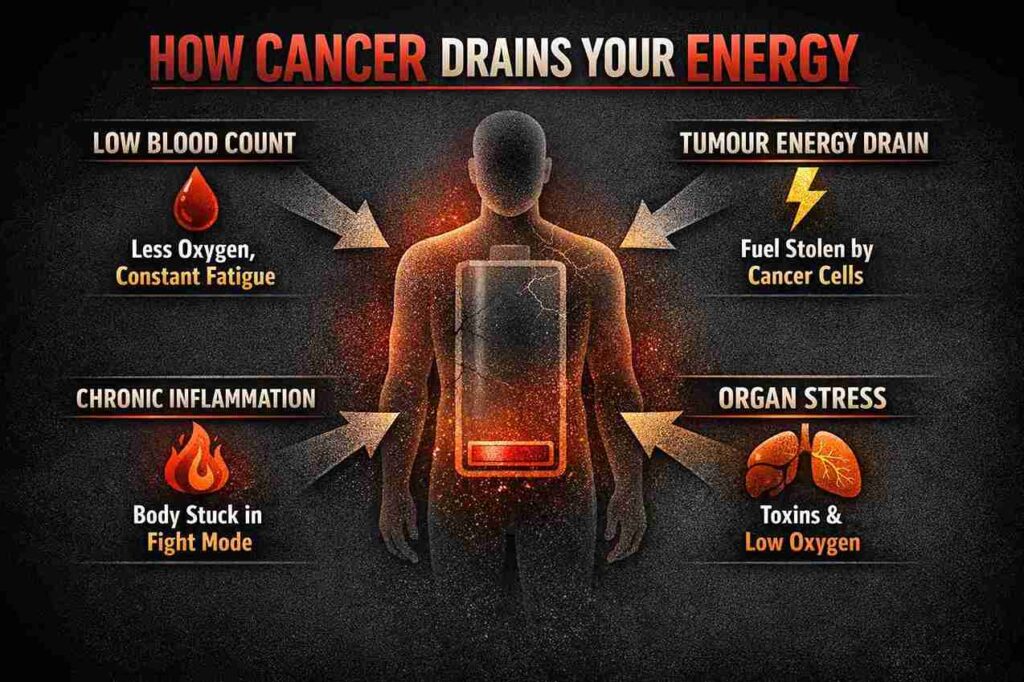
Cancer disrupts the body’s energy systems by consuming nutrients, lowering oxygen delivery, triggering inflammation, and stressing organs.
This leads to deep exhaustion that does not improve with sleep or rest.
What most people don’t understand:
Cancer-related fatigue affects a vast majority of patients at some point, with estimates ranging from 60% to 100% – [Source]
Bone-deep exhaustion that does not improve with rest is a recognised symptom that can be associated with cancer, including bone cancer, leukaemia, and other types of advanced or metastatic cancers. [Source]
How Exactly Does Cancer Drain the Body’s Energy?
Cancer-related fatigue occurs because the body remains
- In a constant fight-or-flight mode
- Loses its efficiency in using oxygen
- And struggles to clear waste.
Energy is continuously diverted away from normal function toward survival.
Your body is fighting an invisible war
When cancer cells multiply, your immune system goes into overdrive trying to fight them. It’s burning energy 24/7—even while you sleep.
Tumours steal your fuel
Some cancers hijack nutrients meant for normal cells. Your body’s trying to function, but the cancer is siphoning off the energy supply. You’re left running on empty.
Hidden bleeding drains you
Cancers of the stomach or colon often cause slow, invisible bleeding. You don’t see it, but your red blood cell count drops. Less oxygen reaches your muscles and brain. Result? Constant fatigue, dizziness, and weakness.
Toxins accumulate
When liver or kidney cancers develop, your body can’t clear waste properly. Toxins build up. You feel foggy, heavy, dull—like you’re moving through thick water.
This “Persistent fatigue cancer” link is not to create fear — it is to create awareness.
Which Types of Cancer Commonly Begin With Fatigue?
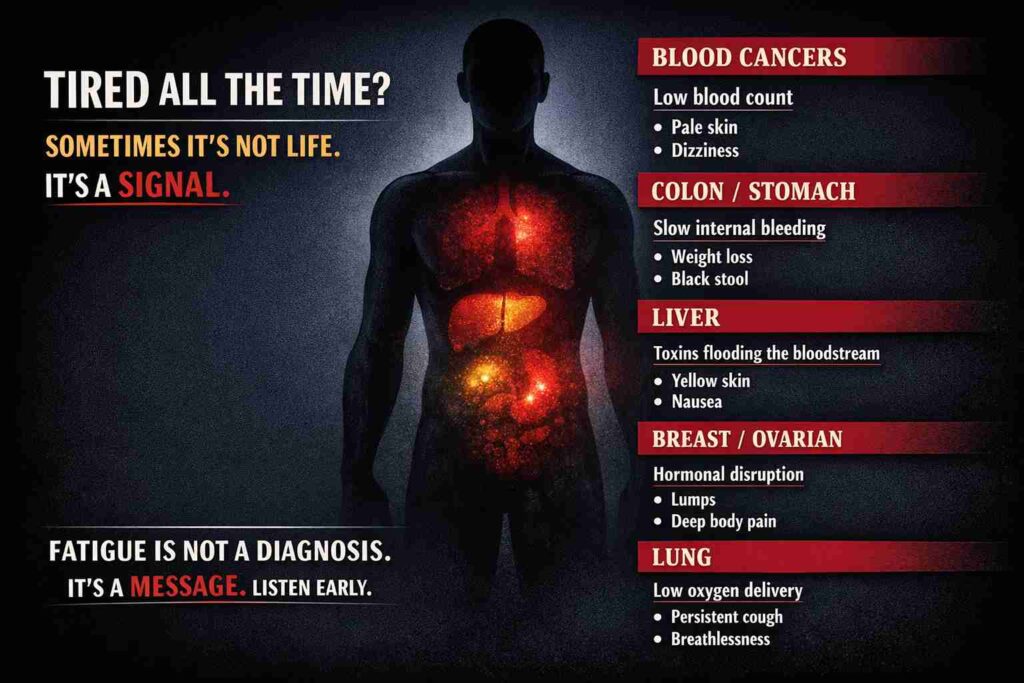
Several cancers initially manifest with fatigue because they affect red blood cell production, oxygen supply, hormone levels, or metabolism. Fatigue often appears before pain or visible symptoms.
Blood cancers (Leukaemia, Lymphoma)
Your bone marrow isn’t producing enough healthy blood cells. Fatigue hits first, often with pale skin and frequent infections.
Colon or stomach cancer
Slow internal bleeding causes anaemia. You feel constantly tired, notice weight loss, and maybe see very dark or black stools.
Liver cancer
Toxin buildup makes you feel sluggish. Yellowish skin or eyes might appear later.
Lung cancer
Your body isn’t getting enough oxygen. Fatigue comes with a persistent cough or breathlessness.
Breast or ovarian cancer
Hormonal changes and the body’s response to tumours cause unexplained tiredness, sometimes with subtle pain.
Early medical consultation with Dr Suvadip Chakrabarti, an oncology doctor in Kolkata, helps distinguish routine tiredness from illness.
What Other Symptoms Alongside Fatigue Require Immediate Attention?
Fatigue becomes urgent when accompanied by unexplained weight loss, changes in appetite, bleeding, lumps, night sweats, or a persistent cough. These combinations warrant specialist evaluation without delay.
When fatigue appears with any of these, see a specialist immediately:
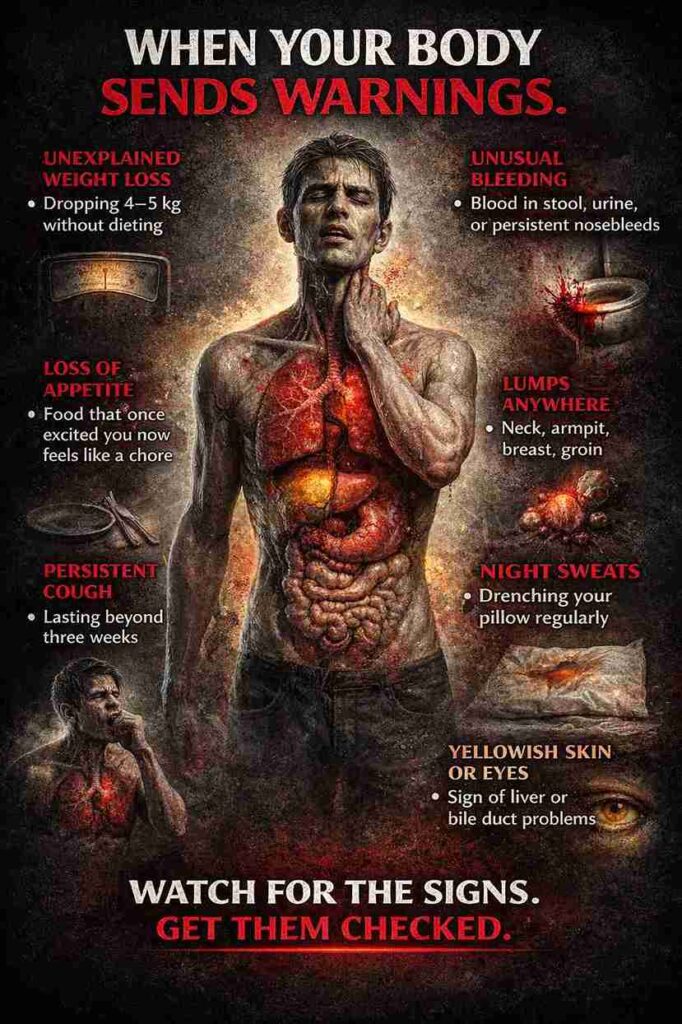
If these symptoms appear alongside regular fatigue, see a cancer specialist in Kolkata immediately.
Early clarity brings peace — not panic.
When Is Persistent Fatigue Not Cancer?
Most long-lasting fatigue is caused by treatable, non-cancerous conditions such as thyroid imbalance, vitamin deficiencies, diabetes, mental health issues, or sleep disorders. Medical testing helps rule out serious causes and restore clarity.
Most of the time, persistent tiredness has treatable, non-cancerous causes:
- Thyroid imbalance: Common in women over 30
- Vitamin deficiencies: B12, D, iron
- Diabetes: High or low blood sugar causes fatigue
- Depression or anxiety: Mental health deeply affects physical energy
- Sleep disorders: Apnea or chronic insomnia
The goal isn’t to panic—it’s to investigate.
Getting tested by an experienced oncologist in Kolkata rules out serious illness and often reveals simple, fixable problems.
What Happens During a Cancer Fatigue Evaluation?
A fatigue evaluation begins with listening and basic tests, followed by targeted investigations only if needed. The goal is clarity — either to detect cancer early or confidently rule it out.
Many people avoid doctors because they’re scared of what they’ll find. But here’s the reality of visiting a trustworthy cancer specialist in Kolkata.
Step 1: Listening
The oncology doctor asks about your daily routine, diet, sleep patterns, and family history. No judgment—just understanding.
Step 2: Basic Testing
Complete blood count checks for anaemia or abnormal cells. Liver and kidney function tests. Maybe an ultrasound or X-ray if needed.
Step 3: Targeted Investigation
If something looks off, more specific tests, such as CT scans, endoscopy, or biopsy, confirm what’s happening.
Step 4: Clear Communication
You get honest answers. If it’s cancer, you learn the stage, treatment options, and expected outcomes. If it’s not, you get treated for what’s actually causing the fatigue.
Why Does Early Consultation Change Outcomes So Dramatically?
Early-stage cancers have significantly higher survival rates and require less aggressive treatment. Delayed evaluation often limits options and increases treatment intensity.
- Early-stage cancer has survival rates of 80-95% – [Source]
- Late-stage? Those numbers drop roughly to 20-30%. – [Source]
Every month you ignore persistent symptoms, cancer (if present) advances.
What could have been treated with surgery alone might now need chemotherapy and radiation. And what might have been cured might become manageable at best.
What Is the Most Important Message About Persistent Fatigue?
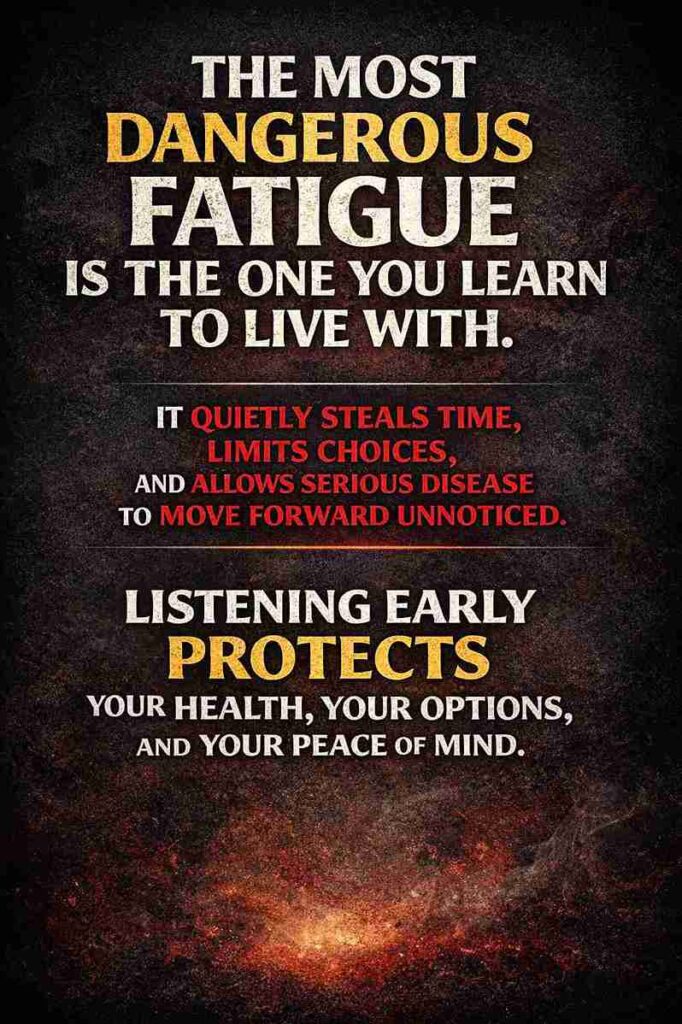
If you’re feeling something off. And, if that exhaustion has overstayed its welcome, consult Dr Suvadip Chakrabarti, a leading cancer specialist in Kolkata.
📞 Call and book your consultation today!
People Also Ask
Q: How long should fatigue last before I worry?
If it persists for more than 3 weeks without improvement, get evaluated.
Q: Can stress alone cause this level of tiredness?
Yes, but ruling out physical causes first gives you peace of mind.
Q: What tests can detect cancer early?
Blood tests, imaging scans, and, if needed, biopsies help quickly rule out disease.
Q: What if tests show nothing wrong?
That’s good news. You can then address lifestyle, mental health, or nutrition with confidence.
Q: Are there any warning signs besides fatigue?
Yes. Persistent weight loss, loss of appetite, unusual bleeding, or new lumps should never be ignored.