

Smoking and alcohol are major risk factors for head and neck cancer, but they are not the only ones.
A person who has never smoked or consumed alcohol can still develop these cancers because risk also varies by the site involved and factors such as HPV infection, betel quid or areca-nut use, certain occupational exposures and immune status.
Understanding these risk factors is important because not every case can be explained by smoking or drinking. It also helps people recognise symptoms early, rather than assuming they are not at risk.
Smoking and Alcohol Aren’t the Only Culprits — Here’s Why That Matters
Tobacco and alcohol are the primary combined drivers for head and neck cancers, including the mouth, throat, and larynx. Using both substances together multiplies the risk far beyond the effect of either one alone, accounting for at least 75% of these cases globally. [Source].
However, they do not explain every diagnosis.
Non-smokers and people who do not drink alcohol can develop head and neck cancer, particularly when other risk factors are present.
The specific risks also depend on which part of the head and neck is affected. HPV, betel quid chewing and certain occupational or biological factors can contribute to risk in different ways.
That is why the absence of a smoking or drinking history should not be used to dismiss a persistent mouth, throat or neck symptom.
HPV — A Growing and Often Overlooked Cause
HPV and head and neck cancer are closely linked, especially cancers of the tonsils and base of the tongue.
High-risk HPV, especially type 16, is a proven cause of many oropharyngeal cancers. Its role has risen significantly in recent years, with more cases being diagnosed in younger adults, including people with no history of smoking or heavy drinking [Source].
Most HPV infections clear naturally, but persistent infection can lead to cancer-causing cellular changes. The vaccine helps prevent infection with high-risk HPV types and is most effective when given before exposure, making it an important tool for cancer prevention.
Betel Nut, Gutka, and Chewing Tobacco — A Major Risk in India
Betel nut, gutka, and chewing tobacco are major public health hazards in India. They drive a massive burden of oral and oesophageal cancers, causing painful conditions like oral submucous fibrosis (OSMF) and leukoplakia from toxic chemicals and carcinogens in daily-use products. [Source].
Regular use of these products is strongly associated with cancers of the oral cavity and oropharynx, making them an important contributor to head and neck cancer causes in the Indian population.
Health Risks of Areca Nut and Gutka
- Oral and throat cancer: Regular chewing significantly increases the risk of cancers of the oral cavity and oropharynx.
- Oral submucous fibrosis (OSMF): Long-term use can cause progressive mouth stiffness, making it difficult to open the mouth fully.
- Addiction: Both areca nut and tobacco have addictive properties that make quitting difficult.
- Higher risk with frequent use: The likelihood of disease rises with more frequent and longer-term chewing.
Takeaway: Avoiding cigarettes or alcohol does not eliminate the risk from paan, supari or gutka. Healthcare professionals should always evaluate persistent mouth changes in regular users.
What Other Factors Can Increase Head and Neck Cancer Risk?
Poor Oral Health and Persistent Oral Changes
Persistent oral problems should not be ignored, although poor oral hygiene should not be presented as a direct universal cause of head and neck cancer.
A persistent sore, ulcer, red or white patch, bleeding area or unexplained change warrants professional assessment rather than being attributed to simple irritation.
Prolonged Sun Exposure and Lip Cancer
Long-term ultraviolet exposure is particularly relevant to lip cancers. People who spend substantial time outdoors should protect exposed skin and lips from excessive UV exposure.
This is a site-specific risk rather than a general explanation for all head and neck cancers.
Occupational Exposure to Chemicals and Dust
Certain occupational exposures can increase risk depending on the substance, intensity and duration of exposure.
Wood dust, for example, is associated with some cancers of the nasal cavity and related structures. Appropriate workplace protection can reduce exposure to recognised carcinogens.
Weakened Immune System
A weakened immune system can alter the body's ability to control certain infections and abnormal cellular changes.
The effect on cancer risk depends on the underlying condition and individual circumstances, so consider this as part of a broader medical risk assessment rather than a standalone cause.
Genetic Conditions and Family History
Most head and neck cancers are not caused by an inherited gene mutation. However, certain genetic conditions can increase susceptibility to particular cancers, and a personal or family history of cancer may influence an individual's overall risk.
Risk should therefore be considered in context rather than reduced to one factor.
What Are the Early Warning Signs You Shouldn’t Ignore?
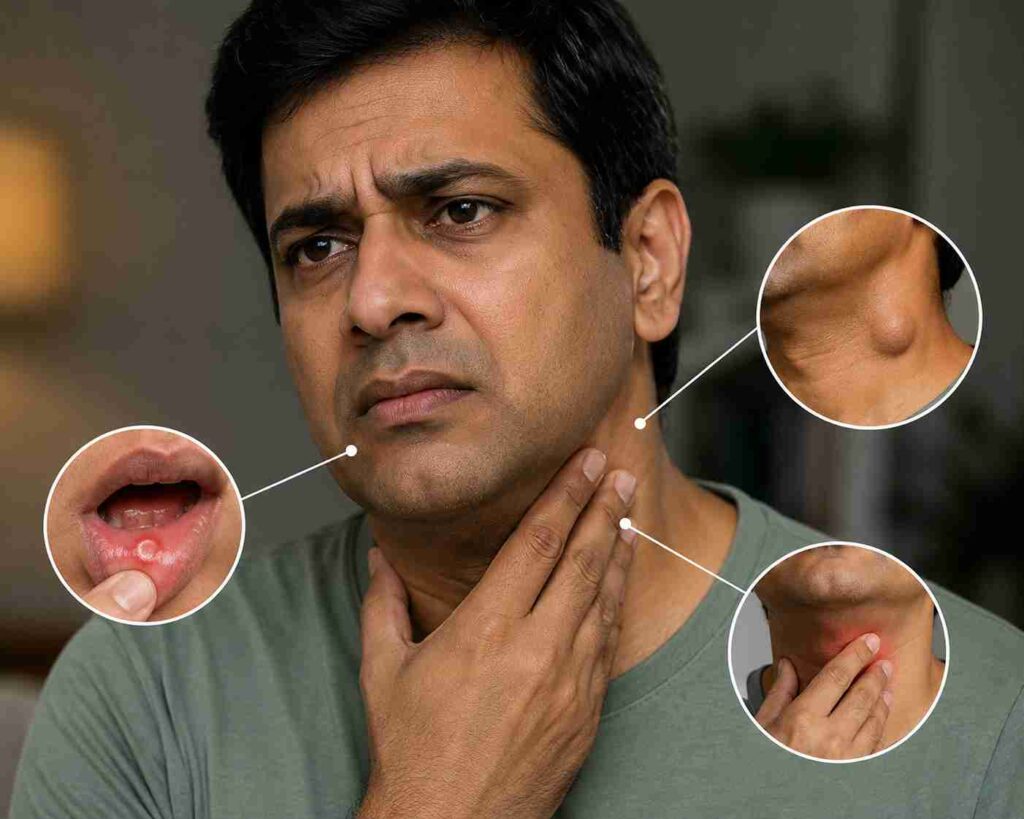
Common early signs of head and neck cancer
- A mouth ulcer or sore that does not heal
- A persistent lump in the neck
- Ongoing hoarseness or voice changes
- Difficulty or pain while swallowing
- Persistent sore throat
- Unexplained red or white patches inside the mouth
- Persistent mouth pain, numbness or unexplained bleeding
These symptoms do not always indicate cancer, but any persistent or unexplained change should be medically evaluated.
When Should You See a Head and Neck Cancer Surgeon?
Seek medical evaluation if you have:
- A mouth ulcer that does not heal within 2–3 weeks
- A persistent lump in the neck
- Ongoing hoarseness or voice changes
- Difficulty or pain while swallowing
- Unexplained red or white patches inside the mouth
There is no standard routine screening for people without symptoms. A clinician should assess persistent or unexplained changes through a clinical examination, with imaging or biopsy recommended only when necessary.
Final Takeaway
Head and neck cancer is not only a smoker's disease. That’s why education and awareness matter.
- Don't ignore persistent symptoms such as a non-healing mouth ulcer, hoarseness, difficulty swallowing or a neck lump.
- HPV, betel nut and gutka are important risk factors alongside tobacco and alcohol.
- There is no routine screening test for people without symptoms—clinically evaluate persistent changes.
- Early diagnosis offers the best chance for effective treatment and better outcomes.
If you notice any persistent mouth, throat or neck changes, meet Dr Suvadip Chakrabarti, an experienced head and neck cancer surgeon in Kolkata, for a comprehensive evaluation and personalised treatment plan.
Call to book a personalised consultation today.
People Also Ask
Can Someone Who Has Never Smoked or Consumed Alcohol Still Get Head and Neck Cancer?
Yes. Non-smokers can develop head and neck cancer because factors such as HPV infection, betel quid or areca-nut use and other site-specific risks can contribute independently of smoking and alcohol.
How Does HPV Spread, and Can the Vaccine Help Prevent Head and Neck Cancers Too?
HPV spreads through intimate skin-to-skin contact. Vaccination helps prevent infection with HPV types that can cause cancer, including HPV-associated oropharyngeal cancer. It works best when given before HPV exposure.
Is Chewing Betel Nut Without Tobacco Still Harmful?
Yes. Areca nut is itself carcinogenic, so betel quid can increase oral and oropharyngeal cancer risk even without added tobacco. Adding tobacco can increase the risk further.
Is There a Routine Screening Test for Head and Neck Cancer?
There is no standard routine screening test for head and neck cancers in asymptomatic people. However, dentists or doctors may examine the mouth during routine care, while persistent symptoms or significant individual risk may require clinical evaluation.