

Many elderly patients can safely undergo major cancer surgery when their overall health, organ function, nutrition, and physical fitness are carefully evaluated.
A skilled cancer surgeon considers multiple health factors instead of age alone to determine whether surgery is likely to be safe, beneficial, and aligned with the patient's recovery goals and quality of life.
Is my parents too old for a major cancer operation?
No, age alone does not determine if elderly patients are too old for major cancer surgery. Many older adults recover well when appropriately selected.
Before making recommendations, doctors evaluate overall
- Fitness: Often predicts surgical outcomes better than age alone.
- General health: Helps estimate surgical risks and recovery.
- Cancer type, stage, and urgency: Determines the most appropriate treatment.
- Family support and rehabilitation needs: Influences postoperative recovery.
- Individual circumstances: Ensure safer, personalised care.
Does age alone determine whether cancer surgery is safe?
No. Chronological age alone does not determine whether cancer surgery is safe.
Doctors consider physiologic age, surgical fitness in elderly patients, functional status, and the type and stage of cancer to assess surgical risk.
Many older adults in good health can safely undergo cancer surgery with appropriate evaluation and care.
Chronological age is not the same as biological fitness
- Chronological age is the number of years a person has lived.
- Biological fitness (or physiologic age) reflects how well the body's organs, cells, and physiological systems function.
A person's biological fitness, rather than chronological age alone, is often a better indicator of whether they can safely undergo cancer surgery.
Is there an upper age limit for cancer surgery?
There is no absolute upper age limit for cancer surgery. Decisions are based on overall health, expected surgical benefit, and whether the patient can tolerate treatment safely.
- Patients in their 70s and 80s may still be suitable candidates.
- Evidence supports carefully selected geriatric cancer surgery.
- Treatment recommendations remain individualised.
- Benefits should clearly outweigh potential cancer surgery risks in elderly.
What do doctors check before recommending major surgery?

Doctors perform a detailed preoperative assessment for elderly patients to determine whether surgery is appropriate. This evaluation typically includes:
- Heart, lung, kidney and liver function
- Nutritional status and recent weight changes
- Mobility, balance and muscle strength
- Memory and cognitive function
- Current medicines and chronic illnesses
- Cancer stage and expected surgical benefit
Factor 1. Functional independence before surgery
Patients who remain independent before surgery generally recover faster and experience fewer complications.
Assessing everyday function helps cancer doctors predict recovery after surgery in elderly patients, estimate rehabilitation needs, and determine whether they can return to independent daily activities.
Can the patient manage everyday activities?
Yes, most patients can manage everyday activities before cancer surgery.
- Bathing, dressing and eating independently are positive indicators.
- Difficulty with routine activities may require additional support.
- Functional assessment guides discharge planning.
- Occupational therapy may identify rehabilitation needs.
Why walking speed and activity levels matter
Maintaining a high level of physical activity and a brisk walking pace before cancer surgery can improve recovery, reduce complications, and shorten hospital stays.
This approach, known as prehabilitation, strengthens your heart, lungs, and muscles, helping your body better tolerate anaesthesia, surgery, and the demands of post-operative recovery.
Factor 2. Frailty, muscle strength and recent falls
Frailty reflects reduced physical reserve rather than age itself.
Identifying frailty helps cancer doctors estimate complications, personalise treatment planning for elderly patients, and determine whether health optimisation before surgery may improve outcomes.
What does frailty mean in a cancer patient?
Frailty describes decreased strength, endurance, and resilience, making it harder for the body to recover from surgery or other major medical stress.
How Frailty Is Identified (Quick View)
| Frailty Characteristic | What It Means |
| Reduced resilience | Less able to cope with illness, surgery, or medical stress. |
| Declining physical function | Unintentional weight loss, weakness, and poor endurance. |
| Higher health risks | Greater risk of treatment side effects, post-operative complications, falls, and longer hospital stays. |
Can frailty improve before surgery?
Yes. Frailty can often be improved before cancer surgery.
In many patients, structured prehabilitation programmes combining targeted exercise, nutritional support, optimisation of medical conditions, and psychological support improve physical resilience, reduce post-operative complications, and support a faster recovery after surgery.
So, can a frail patient undergo cancer surgery? In many cases, yes. Improving frailty before an operation helps more patients become suitable candidates.
Factor 3 — Heart, lung, kidney and liver function
Healthy heart, lungs, kidneys, and liver helps determine whether a patient can safely tolerate major surgery and anaesthesia. Cancer surgeons assess these organs to influence surgical safety, healing, and the risk of complications before, during, and after the operation.
Why organ function matters during anaesthesia
Healthy heart, lung, kidney, and liver function help the body tolerate anaesthesia safely and recover after surgery.
Doctors carefully evaluate anaesthesia risk in elderly patients before recommending a major cancer operation.
What if the patient has heart or kidney disease?
Many people ask, "Can a heart patient undergo cancer surgery?" Yes, they can, provided their heart condition is stable and well controlled.
Similarly, patients with kidney disease can often undergo cancer surgery.
Careful assessment of kidney function, optimisation of medical conditions, and appropriate perioperative care help many patients safely undergo surgery.
Factor 4 — Diabetes, blood pressure and other medical conditions
Well-controlled chronic medical conditions do not automatically prevent cancer surgery.
Doctors optimise diabetes, blood pressure, and other illnesses before surgery because good medical control lowers complications, supports healing, and improves overall recovery.
How diabetes may affect recovery
Poorly controlled diabetes may slow wound healing and increase the risk of infection after surgery. Good blood sugar control supports safer recovery and better surgical outcomes.
Why the complete medical history matters
A detailed medical history helps doctors identify health conditions, previous operations, allergies, and medicines that may influence surgical planning and postoperative recovery.
Medicines and blood thinners must be reviewed
Some medicines, particularly blood thinners, diabetes drugs, and certain heart medications, may need temporary adjustment before surgery to reduce bleeding and other complications.
Factor 5. Nutrition, appetite and recent weight loss
Good nutrition supports wound healing, immunity, and muscle strength after surgery. Poor appetite or unintended weight loss may reduce the body's ability to recover.
That’s why nutritional status is assessed before deciding on surgery.
Why unexplained weight loss matters
- Unintentional weight loss may indicate poor nutritional reserve.
- Low muscle mass increases the risk of postoperative complications.
- Reduced protein stores can delay wound healing.
- Early nutritional assessment helps guide treatment decisions.
Can nutrition improve surgical readiness?
Yes, targeted nutrition is a key component of cancer prehabilitation.
Correcting malnutrition before surgery helps rebuild muscle mass, strengthen immune function, improve wound healing, reduce post-operative complications and infections, and shorten hospital stays, making patients better prepared for cancer surgery.
So, how to prepare an elderly patient for cancer surgery? It requires a multimodal prehabilitation approach that combines nutritional optimisation, physical exercise, optimisation of existing medical conditions, and psychological support.
This improves surgical readiness and recovery.
Factor 6. Memory, cognition and risk of postoperative confusion
Memory and thinking ability influence recovery after major surgery. Identifying cognitive problems before surgery allows doctors and families to plan appropriate support, reduce complications, and improve recovery.
Why doctors assess memory before major surgery
Doctors assess memory and cognitive function before major cancer surgery to establish a baseline of brain function. This helps identify patients at higher risk of post-operative delirium and post-operative cognitive dysfunction (POCD).
It also allows the surgical team to personalise anaesthesia, recovery planning, and supportive care.
What is postoperative delirium?
Post-operative delirium is a sudden state of confusion that commonly occurs after major surgery, especially in older cancer patients.
It can affect up to 50% of older adults undergoing major procedures. Symptoms usually develop within 1 to 3 days after surgery.
How families can help
Families can support recovery by providing reassurance, encouraging orientation, reporting sudden behavioural changes promptly, and helping maintain familiar routines during hospitalisation and rehabilitation.
Factor 7. Cancer stage and complexity of the operation
Cancer stage and tumour complexity determine the type, extent, and goal of surgery. Early-stage cancers often require less extensive procedures. Advanced cancers may need more complex operations with longer recovery
What type of cancer surgery is being recommended?
Major procedures, including pancreatic, oesophageal, lung, or colon cancer surgery, head and neck cancer surgery may be recommended in elderly patients when complete tumour removal requires extensive surgery. These operations place greater physical demands on older patients than less invasive procedures.
Will surgery cure the cancer or control its symptoms?
Surgeons determine whether the operation is curative or palliative. Curative surgery aims to remove the cancer completely. Palliative surgery relieves symptoms such as pain, bleeding, or bowel obstruction to improve quality of life.
Does major surgery offer enough benefit?
Doctors compare the expected benefits of surgery with its risks. Major surgery is recommended when it is likely to extend survival or improve quality of life.
They also consider the risk of loss of independence after cancer surgery, particularly in frail older adults. If the risks outweigh the benefits, less invasive treatments may be a better option.
Factor 8. Recovery support, rehabilitation and patient goals
Recovery support after cancer surgery is highly individualised. A specialised oncology rehabilitation team creates a personalised plan to manage pain, reduce fatigue, restore function, and help patients return to daily life.
Who will help the patient after discharge?
Family members, caregivers, rehabilitation specialists, and community healthcare services often play important roles during recovery at home.
Is returning to independence realistic?
Yes. Most patients can regain independence with early rehabilitation. Occupational therapists help patients relearn daily activities, while rehabilitation addresses pain, weakness, and lymphoedema. With consistent therapy and home exercises, many resume light daily activities within four to eight weeks.
What outcome matters most to the patient?
Beyond successful tumour removal, patients value quality of life, emotional well-being, and returning to work, hobbies, and daily routines. Preventing loss of independence is a major rehabilitation goal.
Questions families should ask the cancer surgeon
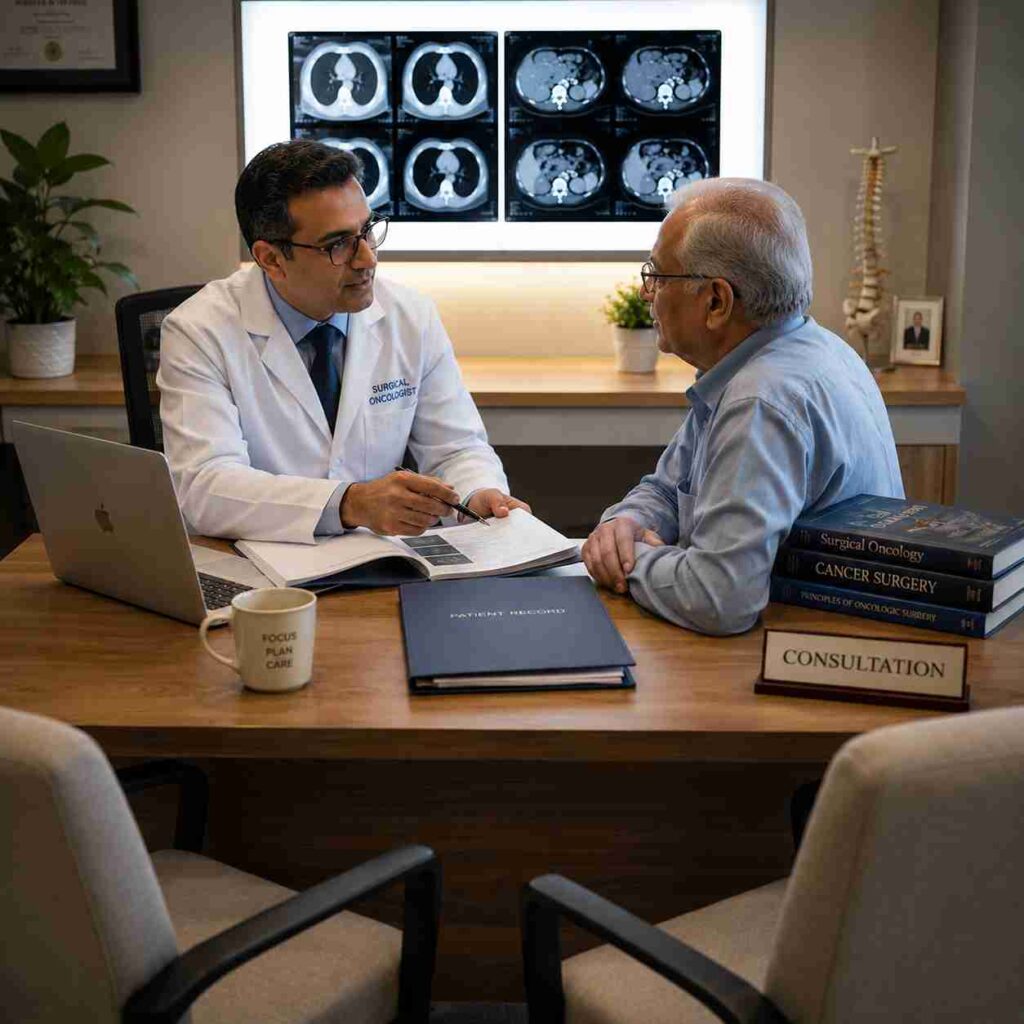
- Is surgery the best treatment option?
- What benefits are expected from surgery?
- What complications are most likely?
- How long will recovery take?
- Will rehabilitation be required?
- Are non-surgical treatments appropriate?
- What support will be needed after discharge?
Personalised assessment matters more than age
Successful surgical decisions are based on comprehensive health assessment rather than age alone.
Consult Dr Suvadip Chakrabarti, an experienced cancer surgeon in Kolkata, for a personalised evaluation.
People Also Ask
Can an 80-year-old survive major cancer surgery?
Yes. Many patients undergo cancer surgery after 80 successfully when they have good overall health, adequate organ function, and careful preoperative assessment. Age alone does not determine survival or recovery.
Is 75 too old to undergo cancer surgery?
No. Cancer surgery after 70 is often safe when the patient's overall health, functional status, and expected surgical benefits outweigh the potential risks. Individual assessment is essential.
What makes an elderly person unfit for surgery?
Severe frailty, poorly controlled medical conditions, advanced organ failure, severe malnutrition, or inability to tolerate anaesthesia may increase surgical risk and make major surgery unsuitable.
Is robotic cancer surgery safer for elderly patients?
Yes. Robotic cancer surgery for elderly patients is generally considered a safe and highly viable option. Robotic surgery may reduce blood loss, pain, hospital stay, and recovery time for selected patients. However, suitability depends on the cancer type, stage, and individual health rather than age alone.
How long does recovery take after major cancer surgery?
Recovery varies with the type of surgery, overall health, and complications. Hospital stay may last several days, while complete recovery and rehabilitation often take weeks to several months.
Can a patient with diabetes or heart disease undergo cancer surgery?
Yes. Many patients with diabetes or heart disease safely undergo surgery when these conditions are thoroughly evaluated, optimally controlled, and monitored by the multidisciplinary medical team.
Can surgery be delayed to improve strength?
Yes. When clinically appropriate, surgery may be postponed briefly to improve nutrition, physical fitness, control medical conditions, and optimise overall health before the operation.
What happens when an elderly patient is not fit for surgery?
If surgery is unsafe, doctors may recommend chemotherapy, radiotherapy, targeted therapy, immunotherapy, endoscopic procedures, or supportive and palliative care based on the cancer type and patient goals.