

A stage 4 cancer diagnosis no longer automatically means all treatment options are exhausted. Advances in immunotherapy, targeted therapy, robotic oncology, molecular profiling, and precision radiation have significantly changed how many advanced cancers are managed today.
Many patients now seek advanced oncology evaluation from Dr Suvadip Chakrabarti, a surgical oncologist in Kolkata, to assess available treatment pathways and personalised cancer treatment strategies.
In today's blog, we dive into understanding what Stage 4 cancer means and whether it is always untreatable or not.
What Does Stage 4 Cancer Actually Mean?

Stage 4 cancer means the disease has spread beyond its original site to distant organs or tissues. However, the extent of spread can vary significantly between patients.
Some patients may have limited metastatic disease involving only a few lesions, while others may have widespread systemic involvement.
Why Stage 4 Cancer Behaves Differently In Different Patients
Modern oncology increasingly focuses not only on cancer stage, but also on:
- Tumour biology
- Mutation profile
- Organ involvement
- Treatment responsiveness
- Overall patient fitness
This is why two patients with the same stage 4 diagnosis may experience very different treatment outcomes.
Advanced cancer treatment increasingly depends on detailed oncology assessment rather than stage alone.
How Doctors Decide Stage 4 Cancer Treatment
In many advanced cancers, treatment planning depends on metastatic extent, tumour biology, organ involvement, molecular findings, and disease progression patterns rather than stage alone.
Modern cancer care has become increasingly personalised, particularly in metastatic disease management.
Why Stage Alone No Longer Decides Cancer Treatment
Advanced cancer treatment increasingly depends on molecular profiling, biomarker analysis, and multidisciplinary oncology planning rather than stage alone.
How Molecular Testing Changes Cancer Treatment
Modern testing may identify biomarkers such as EGFR, HER2, ALK, BRAF, BRCA, or PD-L1 that help determine whether patients could benefit from:
- Targeted therapy
- Immunotherapy
- Precision-guided treatment
- Advanced multimodal oncology strategies
How Biomarker Testing Helps Cancer Treatment
Biomarker-driven oncology helps identify which patients may respond better to specific therapies instead of relying only on conventional chemotherapy approaches.
How Tumour Genetics Affect Treatment Response
Certain mutations may significantly influence treatment effectiveness, disease progression patterns, and eligibility for personalised cancer treatment approaches.
In many metastatic cancers, treatment decisions now begin with tumour biology evaluation before selecting chemotherapy or surgery.
Modern oncology increasingly evaluates eligibility for targeted therapies even after disease progression.
Why Precision Oncology Matters In Stage 4 Cancer
Precision oncology allows cancer specialists to personalise treatment based on molecular findings, treatment response patterns, and overall disease behaviour.
As an experienced cancer specialist in Kolkata, Dr. Suvadip Chakrabarti evaluates advanced cancer patients based on metastatic burden, molecular findings, surgical feasibility, and overall disease behaviour.
In some patients, delayed molecular testing or incomplete oncology evaluation may reduce access to advanced treatment options later.
How Modern Treatments Changed Stage 4 Cancer Outcomes
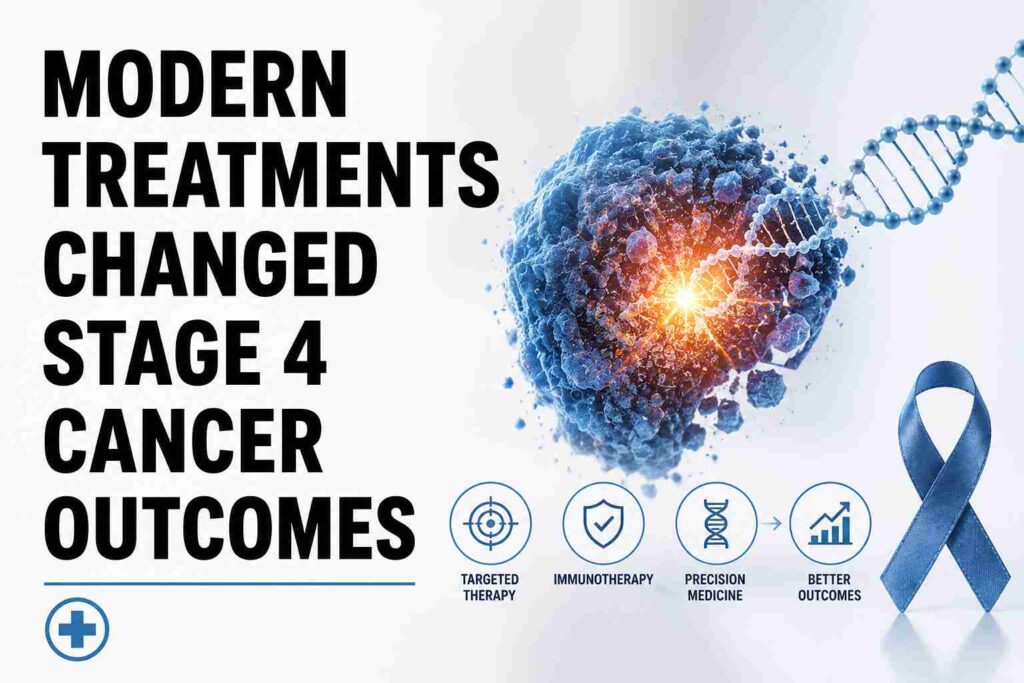
Several stage 4 cancers that were once managed only with conventional chemotherapy are now treated using more personalised and precision-guided oncology approaches.
How Modern Cancer Treatment Changed Stage 4 Cancer Care
Modern oncology treatment may include:
- Immunotherapy
- Targeted therapy
- Robotic cancer surgery
- Precision radiation
- Systemic therapy combinations
- Maintenance therapy
- Molecular-guided treatment sequencing
Why Some Stage 4 Cancers Need Multiple Treatments
Many advanced cancers now require combined treatment planning involving systemic therapy, surgery, radiation oncology, and long-term disease monitoring.
Immunotherapy can help certain metastatic cancers remain controlled longer by improving immune recognition of tumour cells. Targeted therapies may block specific cancer-driving mutations instead of attacking all rapidly dividing cells.
When Robotic Surgery Is Used In Advanced Cancer
Selected patients with limited metastatic spread, also known as oligometastatic disease, may still benefit from robotic surgery or highly focused radiation approaches such as SBRT/SABR.
Some metastatic cancers now remain controlled longer with ongoing treatment.
Many patients diagnosed with advanced cancer seek a second opinion from Dr Suvadip Chakrabarti, a surgical oncologist in Kolkata, to evaluate additional treatment approaches beyond standard chemotherapy alone.
Can People Live for Years With Stage 4 Cancer?
Yes. Some patients now live for years with controlled metastatic disease depending on:
- Tumour genetics
- Treatment response
- Metastatic extent
- Access to advanced oncology care
- Treatment sequencing
Why Some Stage 4 Cancer Patients Live Longer
Certain mutation-driven cancers, hormone-sensitive cancers, and immunotherapy-responsive tumours may remain stable for prolonged periods with ongoing treatment.
Why Cancer Treatment Plans Change Over Time
Long-term outcomes increasingly depend on treatment sequencing, ongoing oncology monitoring, disease progression patterns, and access to advanced cancer treatment approaches.
However, there is no single survival timeline for stage 4 cancer. Online survival statistics are often based on older treatment eras and may not fully reflect advances in immunotherapy, targeted therapy, robotic oncology, or precision cancer management.
Individual oncology evaluation remains essential because stage 4 cancers do not behave uniformly across patients.
As a cancer specialist in Kolkata with experience in complex cancer surgery, metastatic cancer management, robotic oncology, and multidisciplinary treatment planning, Dr. Suvadip Chakrabarti evaluates advanced cancer cases using an evidence-based and personalised oncology approach.
What Happens If Cancer Treatment Stops Working?
Cancer cells may eventually develop resistance to certain therapies through tumour evolution or new mutations.
Even after treatment progression, some patients may remain eligible for newer therapies or precision oncology approaches.
Why Cancer Treatment Stops Working Over Time
Modern oncology increasingly recognises that tumour behaviour may change over time, requiring reassessment of treatment response and disease progression patterns.
Treatment reassessment has become increasingly important because tumour behaviour and treatment responsiveness may evolve over time.
What Happens After Cancer Treatment Stops Working
Modern oncology increasingly uses:
- Repeat molecular testing
- Treatment resequencing
- Combination therapy approaches
- Next-line targeted therapies
- Clinical trial evaluation
to identify additional management pathways when disease behaviour changes.
Can Repeat Molecular Testing Change Treatment?
Repeat molecular testing may help identify new mutations or evolving tumour characteristics that influence future treatment decisions.
Can Treatment Options Change After Progression?
Advanced oncology planning may involve changing therapy combinations, introducing targeted treatment strategies, or reassessing eligibility for newer therapies.
In many advanced cancers, treatment strategy evolves continuously over time based on tumour response and disease progression patterns.
Long-term oncology monitoring remains important in metastatic cancer care.
Patients seeking a second opinion from Dr Suvadip Chakrabarti, a surgical oncologist in Kolkata, often explore newer therapies, precision oncology approaches, or additional treatment combinations after earlier treatment failure.
Why Early Specialist Evaluation Matters In Stage 4 Cancer
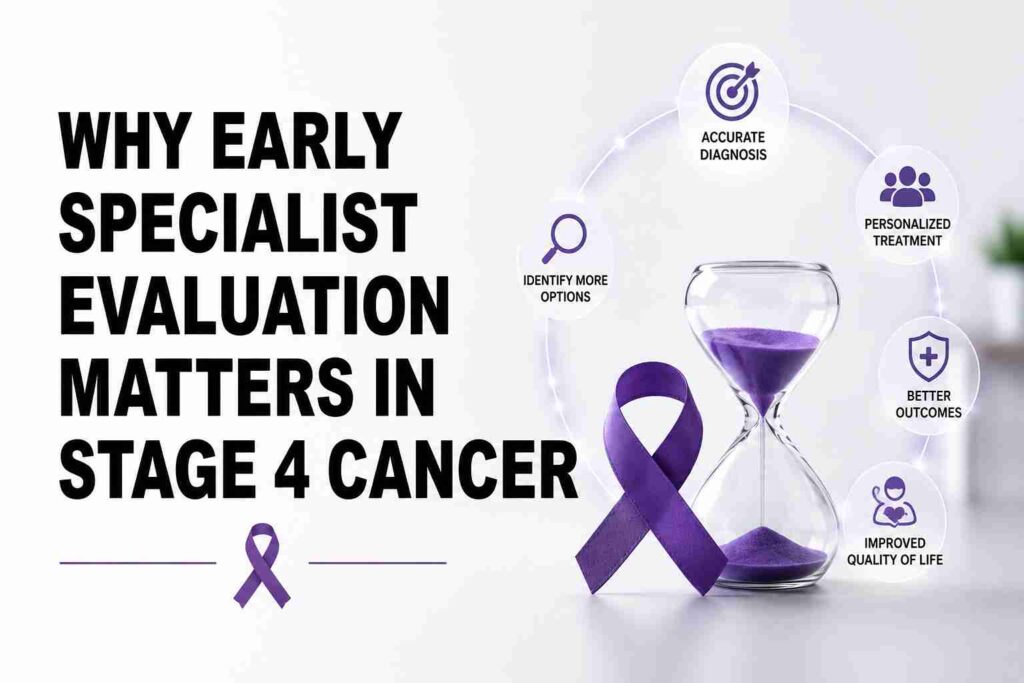
One of the biggest mistakes in advanced cancer care is assuming that stage 4 disease automatically eliminates meaningful treatment possibilities.
Why Early Cancer Evaluation Can Change Treatment Options
Early specialist evaluation may significantly influence access to targeted therapy, robotic oncology, precision radiation, or personalised treatment pathways.
How Multidisciplinary Cancer Planning Helps Patients
Many patients are never fully evaluated for:
- Molecular-guided therapy
- Immunotherapy eligibility
- Robotic surgical options
- Oligometastatic treatment strategies
- Advanced radiation approaches
- Multidisciplinary oncology planning
Why Some Patients Seek A Second Oncology Opinion
Patients seek second oncology opinions to confirm a diagnosis, ensure accurate cancer staging, and explore alternative or advanced treatment options.
It also helps patients make informed treatment decisions and feel more confident about their cancer care plan.
Key Takeaway
Stage 4 cancer is serious, but it is not always untreatable.
Most importantly, stage 4 cancer no longer follows one predictable pathway.
If you are looking for advanced cancer treatment, immunotherapy, or a second opinion in Kolkata, call 9330179441 today to book a consultation with Dr Suvadip Chakrabarti, a reputed surgical oncologist in Kolkata.
People Also Ask About Stage 4 Cancer Treatment
Is there still hope in stage 4 cancer?
Yes. Some patients still benefit from immunotherapy, targeted therapy, robotic oncology, or personalised metastatic cancer treatment after specialist oncology evaluation.
Can Stage 4 cancer go into remission?
Yes. Certain advanced cancers may enter remission depending on tumour biology, molecular findings, and response to personalised oncology treatment strategies.
Does stage 4 cancer always need chemotherapy?
No. Some patients may receive immunotherapy, targeted therapy, hormone therapy, or precision radiation instead of conventional chemotherapy treatment.
Why does cancer treatment stop working sometimes?
Cancer cells may develop resistance through tumour mutations or disease evolution, requiring repeat molecular testing and advanced treatment reassessment.
What are treatment options after chemotherapy failure?
Many patients may still qualify for immunotherapy, targeted therapy, clinical trials, or next-line personalised oncology treatment approaches after chemotherapy progression.
What is PD-L1 testing in cancer treatment?
PD-L1 testing helps determine whether certain advanced cancers may respond better to immunotherapy and precision-guided oncology treatment strategies.
What are signs that stage 4 cancer treatment is working?
Tumour shrinkage, stable scans, symptom improvement, and slower disease progression may indicate positive response to advanced cancer treatment.
Can surgery still help in stage 4 cancer?
Selected patients with limited metastatic spread may still benefit from robotic surgery or focused radiation-based metastatic cancer treatment approaches.
Is immunotherapy available for stage 4 cancer in Kolkata?
Yes. Immunotherapy is available in Kolkata for selected advanced cancers after biomarker testing and specialist oncology evaluation.
When should stage 4 cancer patients seek a second opinion?
Second opinions become important after treatment failure, rapid progression, unclear staging, or incomplete molecular testing during earlier evaluations.