
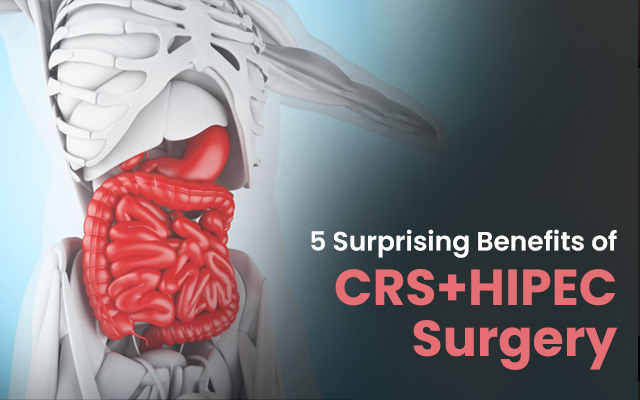
If your cancer has spread in the abdomen, does that mean there’s no hope left?
Not at all. Cancer patients suffering from the disease at an advanced stage can live longer with the right treatment and care.
Thanks to CRS+HIPEC, a powerful combination treatment, patients are getting a second chance at life.
Here's a look at the unexpected ways in which this treatment can make a difference. Know how Dr. Suvadip Chakrabarti, one of the best robotic cancer surgeons in Kolkata, will help improve your treatment outcome.
What is CRS+HIPEC?

CRS stands for Cytoreductive Surgery. It is a highly detailed operation that removes visible tumours from the abdomen.
HIPEC stands for Hyperthermic Intraperitoneal Chemotherapy. It's a warm chemotherapy solution delivered directly into the abdominal cavity (greater part of the digestive tract) after the surgery.
Together, they target cancers that have spread across the peritoneum (the lining of the abdominal cavity), such as:
- Appendix cancer
- Colorectal cancer
- Ovarian cancer
- Peritoneal mesothelioma (a rare cancer in the lining of the abdomen)
- Stomach cancer
Dr. Suvadip Chakrabarti has performed several successful CRS+HIPEC procedures. It has helped cancer patients gain not only more years, but also a better quality of life.
Is CRS+HIPEC worth it?
For selected patients, the answer is a resounding yes.
While CRS+HIPEC may sound intense, the results are often life-changing. Let’s uncover the 5 most important benefits of this surgery and why it’s gaining ground as a promising treatment option.
1. Tackles ‘hidden’ cancer cells effectively
There is a major challenge that cancer surgeons face while treating abdominal cancer in its advanced stage. It is the non-visibility of all tumour cells during surgery.
Here’s where HIPEC shines:
- The heated chemo is circulated across the abdomen for 90 minutes
- It reaches areas that surgery can’t
- It destroys microscopic cancer cells that would otherwise be missed
This targeted attack reduces the risk of early recurrence and improves long-term control.
2. Less impact on the rest of your body
Unlike regular chemotherapy that travels through your entire bloodstream, HIPEC is delivered directly into the abdomen.
This means:
- Lower exposure of chemo to healthy organs
- Fewer common chemo side effects like hair loss, fatigue, and mouth sores
- Concentrated cancer-killing action where it’s needed most
Patients under the care of Dr. Suvadip Chakrabarti report feeling better sooner after recovery. This is because their overall body isn’t as heavily impacted.
3. Better survival outcomes in eligible patients
When performed correctly and at the right time, CRS+HIPEC can dramatically improve survival rates. This happens especially for cancers that were once considered untreatable.
Studies have shown that:
- Patients with peritoneal carcinomatosis from colorectal cancer can live 2–3 times longer with CRS+HIPEC.
- Some patients with low-grade tumours (like pseudomyxoma peritonei) experience long-term disease control, even remission.
Dr. Suvadip Chakrabarti has witnessed these results firsthand. His patients often say that choosing this path gave them hope and time they didn’t think they had.
4. Improved symptom relief and quality of life
Advanced abdominal cancers often cause a host of miserable symptoms:
- Nausea
- Intestinal obstruction
- Fluid build-up (ascites)
- Bloating
- Pain
CRS+HIPEC relieves many of these by physically removing the tumour burden and targeting microscopic disease. Patients frequently say:
“I could finally eat without feeling full.”
“The swelling went down, and I started to feel human again.”
Under the expert hands of a robotic cancer surgeon in Kolkata, Dr. Suvadip Chakrabarti, patients get more than treatment—they get comfort, dignity, and the ability to enjoy everyday life again.
5. Reduces the chances of recurrence within the abdomen
A significant concern with abdominal cancers is that even after standard treatment, they often return in the same area.
CRS+HIPEC helps prevent this by:
- Removing all visible tumours
- Flooding the abdominal cavity with warm chemo to wipe out what’s left
- Minimising the chance of “left-behind” cells growing again
This combination gives patients a head start toward staying disease-free.
How long is the recovery after CRS+HIPEC?

Recovery depends on the extent of surgery and individual health. Generally:
- Hospital stay: 10 to 14 days
- Full recovery: 6 to 8 weeks
- Return to routine life: Gradually over 2–3 months
Dr. Suvadip Chakrabarti ensures every patient receives personalised post-operative care, with close monitoring and support at every step.
Is CRS+HIPEC suitable for everyone?
Not quite, but it is ideal for select patients. It’s most effective when:
- Cancer is confined within the abdominal cavity
- The patient is healthy enough for surgery
- The primary tumour type responds well to HIPEC
Dr. Suvadip Chakrabarti conducts thorough evaluations to determine who will benefit the most. His patient-first approach ensures that no one undergoes the procedure without real potential for gain.
How does this treatment compare to standard chemotherapy?

Is CRS+HIPEC available in Kolkata?
Yes, and patients don’t need to travel far for it.
Dr. Suvadip Chakrabarti, a robotic cancer surgeon in Kolkata, offers CRS+HIPEC at leading centres. He is among the few experts in Eastern India trained extensively in this complex yet life-saving procedure.
Why does the spreading in the abdomen need a different approach?
When certain cancers spread, they don’t always form big, obvious lumps. Instead, they scatter tiny tumour spots across the lining of the belly, which covers organs like your stomach and intestines. These tiny cancer cells are often too small to spot on scans or even during surgery.
That’s where CRS+HIPEC comes in.
- The surgery removes all visible cancer growths from the belly
- The heated chemo wash flows through the abdominal space, destroying leftover cells hiding in places doctors can’t see
This powerful combination gives patients a better chance of stopping the cancer before it grows again. It’s a smarter, more targeted way to treat cancer that’s spread in the belly.
Why do so many patients choose Dr. Suvadip Chakrabarti
CRS+HIPEC isn’t a regular operation. It’s advanced, intense, and needs a surgeon with both experience and careful judgment. Choosing the right doctor can make all the difference in your recovery and the success of the treatment.
That’s why so many people trust Dr. Suvadip Chakrabarti, known as one of the best robotic cancer surgeons in Kolkata. Here’s why:
- He has performed many successful CRS+HIPEC surgeries with strong outcomes
- The doctor listens, explains everything clearly, and helps patients feel confident
- He works with trusted hospitals equipped for complex cancer care
- Dr. Chakrabarti stays involved throughout from the first consultation to full recovery
For patients who once felt out of options, Dr. Chakrabarti offers a way forward based on skill, empathy, and results.
What do patients say after undergoing CRS+HIPEC?
Many patients describe it as:
- A “turning point” in their cancer journey
- The only treatment that truly gave them relief
- Worth the effort, even with the longer recovery
Hope isn’t lost—it just needs the right hands
CRS+HIPEC may sound intense. But for the right patient, it can offer something rare in late-stage cancer care. It is a chance for more time, fewer symptoms, and better living.
Take the next step with confidence
Book a consultation with Dr. Suvadip Chakrabarti, a robotic cancer surgeon in Kolkata, and find out if CRS+HIPEC could be your breakthrough.