
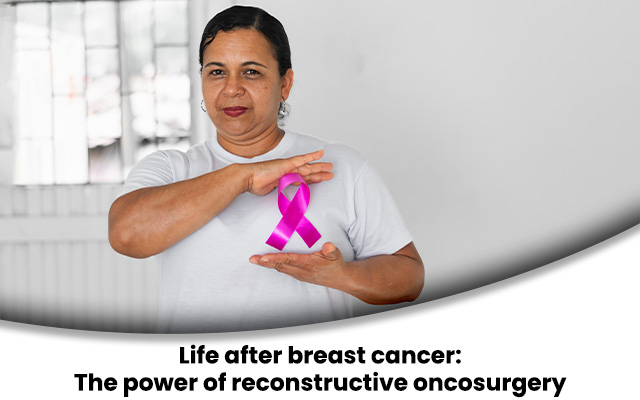
Breast cancer is one of the most common cancers among women today. In cities like Kolkata, more and more women are being diagnosed every year. It's not just a physical illness—it also affects your emotions, your confidence, and your daily life.
The good news? With early detection and the right treatment, many women fight breast cancer and come out stronger. And now, with reconstructive oncosurgery, the journey doesn’t end with removing cancer- it also includes restoring your body and confidence.
In this blog, Dr. Suvadip Chakrabarti, a reputed breast cancer surgeon, provides valuable insights on the power of reconstructive oncosurgery. Know how it impacts life after breast cancer treatment.
What is Reconstructive Oncosurgery?
When breast cancer is treated with surgery, sometimes the doctor needs to remove a part of the breast or the whole breast. This can affect how you look and how you feel about yourself. That’s where reconstructive oncosurgery comes in.
It’s a surgery that helps rebuild the shape of your breast after cancer surgery. A breast cancer surgeon in Kolkata may offer this as part of your treatment plan, either at the same time as cancer surgery or later.
The goal? To help you feel whole again—to look in the mirror and smile with confidence.
Meeting the Surgeon: What to Expect
After your diagnosis, you’ll meet a breast cancer surgeon to understand what comes next. During this consultation, the surgeon will ask about your medical history, check your reports, and explain what kind of surgery you may need.
This is also the right time to ask questions:
- Will I need a lumpectomy or mastectomy?
- Can reconstruction be done at the same time?
- How long will recovery take?
- What will the results look like?
The doctor will guide you through all options and help you make a decision that feels right for you.

What is Breast Reconstructive Surgery?
Breast reconstructive surgery is a procedure to rebuild the shape and look of the breast after mastectomy (breast removal) or lumpectomy (breast-conserving surgery). It can involve using implants or the patient’s own tissue (flap reconstruction) to recreate a natural-looking breast mound.
The goal is to restore symmetry, appearance, and confidence following cancer treatment. This surgery can be done immediately after cancer surgery or delayed until treatment is complete.
It may involve multiple stages, especially if both the breast and nipple need reconstruction. Breast reconstruction is optional but often plays a key role in emotional recovery for many patients.
How long does Breast Reconstruction take to heal?
Initial recovery typically takes up to a few weeks, depending on the type of reconstruction- whether implant-based or flap surgery.
During this time, patients may experience swelling, soreness, and limited arm movement, which gradually improve with rest and light activity.
Full internal healing and final results can take up to a few months, especially for more complex procedures.
Healing speed depends on factors like your overall health, type of surgery, whether radiation is involved, and post-op care.
Follow-up visits are crucial to monitor recovery, manage scars, and ensure implant/flap placement settles correctly.
How Successful is Breast Reconstruction?
Breast reconstruction has a high success rate, with most women reporting satisfaction with their appearance and emotional well-being.
Success also means no major complications, natural-looking results, and restored body confidence.
Factors that affect success include the surgeon's experience, the type of reconstruction, and your body's healing ability.
With the right team and realistic expectations, most patients find breast reconstruction to be a positive, life-affirming decision.

Do Breasts Look Normal after Breast Reconstructive Surgery?
In most cases, yes- breasts can look quite natural after reconstruction, especially with skilled surgical techniques and proper planning.
The shape, size, and contour are carefully matched to your body, and with nipple reconstruction, the appearance improves further. While they may not feel exactly the same as natural breasts, modern methods ensure aesthetically pleasing results.
Implant-based reconstructions offer good symmetry and shape but may feel firmer or sit higher initially.
Flap reconstructions, using your own tissue, tend to look and feel more natural over time.
Final results depend on the surgical method, but most patients are happy with how they look.
Dos and Don’ts after Breast Reconstruction
Dos
- Follow the surgeon’s instructions carefully, especially regarding medications, wound care, and follow-ups.
- Wear the recommended surgical bra or support garment to aid healing and maintain shape.
- Rest and take it easy—let your body heal without overexertion.
- Keep the surgical area clean and dry to avoid infections.
- Report any unusual swelling, redness, or pain to the doctor promptly.
Don’ts
- Don’t lift heavy objects or raise your arms above shoulder level for at least a few weeks.
- Don’t sleep on your stomach until the surgeon says it’s safe.
- Avoid smoking and alcohol, as they can slow healing and increase complications.
- Don’t skip follow-up appointments, even if you feel fine.

More Than Just Surgery: Dealing with Emotions
Let’s be honest—breast cancer brings a lot of emotional stress. Fear, sadness, anxiety, and even anger. Many women worry about their appearance, their families, and their future.
Dr. Suvadip Chakrabarti, a breast cancer surgeon in Kolkata, knows that cancer care isn’t only about medicines and surgery, it’s also about healing your mind and heart. Losing a breast can affect your self-esteem. You may not feel like yourself anymore.
That’s why support matters. Whether it’s your family, friends, a counsellor, or a support group- talking and sharing help a lot. Many women say reconstructive surgery helped them feel like “themselves” again. It gave them back their confidence.
Life After Surgery: Healing and Moving Ahead
Recovery takes time, and every woman heals at her own pace. A breast cancer surgeon will explain what to expect after the surgery.
Here’s a general idea:
- You may stay in the hospital for a few days.
- Basic healing can take up to a few weeks.
- Full recovery might take a few months, depending on your surgery and overall health.
You’ll need to take care of your stitches, avoid lifting heavy things, and follow the doctor’s advice. You might be asked to do simple exercises to regain strength and movement.
Good food, plenty of rest, and light walking can help your body heal. Staying positive also helps your recovery. Don’t hesitate to ask the doctor if anything feels off—they’re there to support you every step of the way.
A New Beginning: You’re More Than Your Diagnosis
Reconstructive oncosurgery is not just about appearance—it’s about moving forward with strength. It’s about reclaiming your life after cancer.
The breast cancer surgeon will be your guide in this process. They’re not just there for surgery—they’re with you for every part of the journey: healing, recovery, and beyond.
With love, care, and the right support, you can come out of this stronger—inside and out.
Conclusion
Awareness is key. Many women don’t even know that reconstructive options exist after breast cancer. But you do have a choice. You don’t have to feel incomplete or live with low confidence.
Consult Dr. Suvadip Chakrabarti, a reputed breast cancer surgeon in Kolkata, who can help you not only fight cancer but also rebuild your life after it. With the right care and support, you can feel whole again and move ahead with hope and courage.